
About the Utah County Clerk's Office
The Utah County Clerk is a county office, separate from the state courts. It serves residents through marriage licenses, elections, passports, and county records and auditor functions. It is not the custodian of district court case files. That distinction matters, because people often send court-record requests here by mistake. For a case file, the court clerk is the right office, but for a marriage license or an election question, the Utah County Clerk is where you go.
The office is best known for its marriage operation, which runs out of its Provo location. The contact card below lists the marriage and passport office.
Utah County Clerk Marriage and Passport Office
111 South University Avenue
Provo, UT 84601
801-851-8109
Mon-Fri 8:00 a.m.-7:30 p.m., Sat 9:00 a.m.-2:00 p.m.
marriage@utahcounty.gov
What the Utah County Clerk Does
The Clerk's duties center on records and services that the county provides directly to the public. These are different from the filings and case records a court clerk handles. The main functions are listed below.
- Issue marriage licenses and certified copies of marriage certificates.
- Run county elections and maintain elections records.
- Provide passport application services.
- Handle county clerk and auditor record functions.
- Process designee and officiant requests tied to marriage.
Many of these functions can be done online at any hour, which is unusual for a county office and a point of pride for the Clerk.
County Clerk vs Court Clerk
The two clerk roles get confused constantly, so it helps to draw the line clearly. The Utah County Clerk keeps marriage, elections, and county records. The court clerk keeps case files for the district and justice courts. A divorce decree is a court record, even though the marriage license behind it came from the county clerk. The table sets the offices side by side.
| Utah County Clerk | Court Clerk | |
|---|---|---|
| Holds | Marriage licenses, elections, passports | Court case files |
| Records | Marriage records and county functions | Civil, criminal, probate, divorce cases |
| Search Tool | County marriage license search | Xchange and MyCourtCase |
| Office | Utah County Clerk in Provo | Fourth District Court |
For case files and certified court documents, see the Clerk of Court page. For marriage and elections, stay with the county clerk described here.
Marriage Licenses and the Online Portal
The Clerk's marriage process is one of the most digital in Utah. Couples can complete the whole application online, sign with digital signatures, and pay by card. After the ceremony, the officiant finalizes the license electronically, and a digital certified copy is available within minutes, with a paper certified copy mailed within the next few business days. There is no waiting period in Utah, but the ceremony must take place within 32 days of the license.
The application itself is built for couples. Each person completes their own section, the form sits on the county's secure server so it can be finished from any device, and a third-party service verifies names, dates of birth, and identities. Two witness names must appear on the certificate, though Utah County says the witnesses do not need to sign. Since 2020, the county document prints both "Marriage License" and "Certificate of Marriage" on one record. The county recommends applying 10 to 14 days before the ceremony.
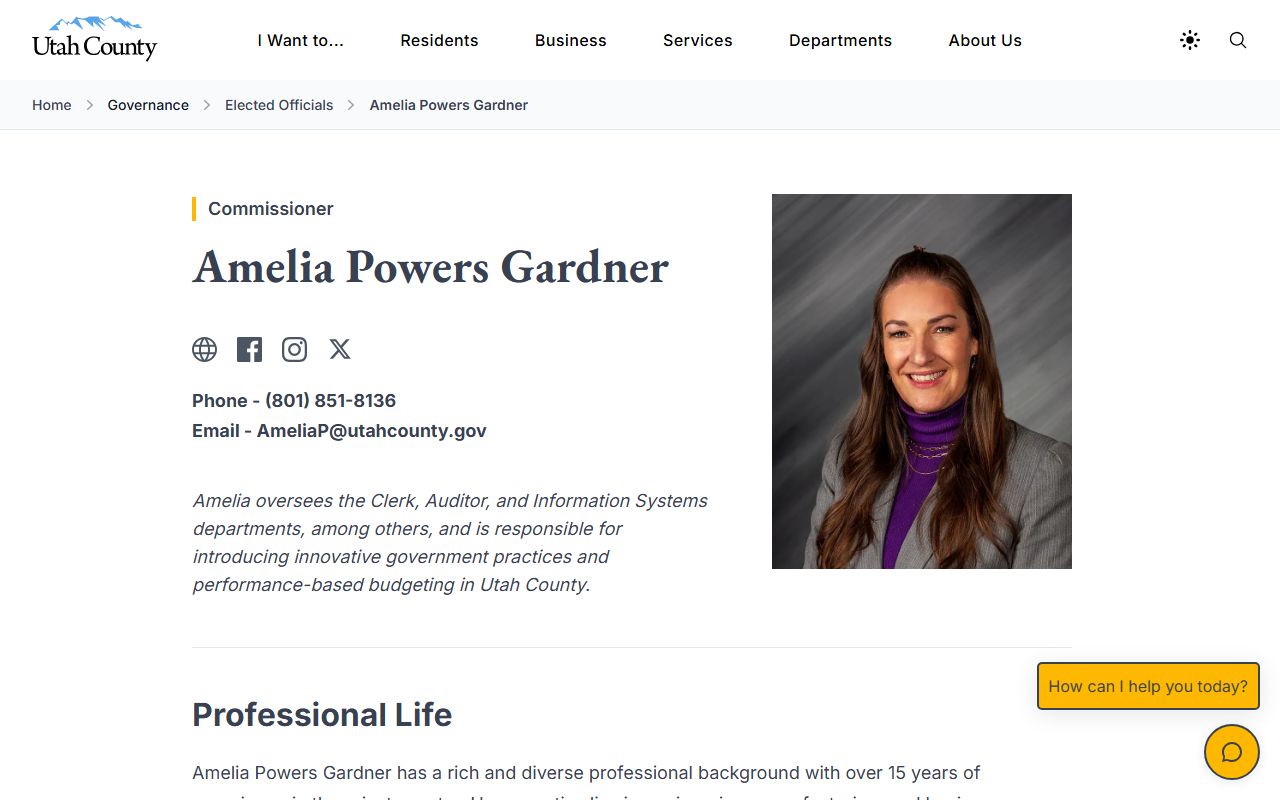
This online system has a clear history. Amelia Powers Gardner, who now serves as a Utah County Commissioner, launched the first completely online marriage license portal while she served as the county's Clerk and Auditor.
For the full marriage license steps, fees, and record search, see the marriage and divorce records page.
Searching Utah County Marriage Records
The Clerk offers a free online marriage license search, and it is the right tool for a Utah County marriage record. The search only covers licenses issued by Utah County, which is the most common reason it returns nothing. Search by last name as it appeared on the license, using the maiden or pre-marriage name, with first name optional. If no record shows, try the spouse's name as it would have read before marriage.
The original license stays in the County Clerk's files, and a certified copy is the legal proof you need for a name change or other official use. A ceremonial certificate from an officiant or venue is a keepsake, not a county certified copy, so it will not work for legal purposes. A Utah County license is valid statewide, but the record stays with the county that issued it, so a license from another county is held by that county instead.
Marriage License Fees
The Clerk sets the marriage license fees. The base fee includes a required fund contribution, and online applicants pay an extra commission fee unless they qualify for a waiver. The table lists the main fees.
| Item | Amount |
|---|---|
| Base marriage license | $50 ($40 county plus $10 Children's Defense Fund) |
| Online Utah Marriage Commission fee | $20, waived with qualifying premarital education |
| Additional certified copy | $10 each |
| Online card processing | 2.5%, $1.50 minimum |
One certified copy is included with the license fee. Payments take Visa, MasterCard, and Discover, but not American Express or e-checks.
Passports and Elections
Beyond marriage, the Clerk's office provides passport services at the same Provo location, sharing hours with the marriage counter. The office also runs county elections, which includes maintaining elections records and supporting the vote. These functions are core county clerk work in Utah and sit apart from anything the courts handle. Because the passport and marriage office shares a counter, the same hours and holiday closures apply, so it is worth checking before an in-person visit. Elections and county record functions are handled by the Clerk's broader office rather than the marriage counter, so the contact point can differ by service.
Online Services and Hours
The Clerk leans heavily on online service. Marriage license applications, document orders, and designee requests can be completed online 24 hours a day, seven days a week. That means most people never need to visit in person. When a visit is needed, the office keeps long weekday hours and Saturday morning hours, and it posts holiday and monthly staff-training closures. The office also offers reminders, officiant and designee functions, and ceremony scheduling by appointment, while other marriage services do not need one. The digital certified copy that arrives within minutes of the officiant finalizing a license is a good example of how far the office has pushed online service.