
How to Search Utah County Court Records
Utah County court records are searched through Utah State Courts systems, not a county-run clerk portal. The main public tool is Xchange, which Utah Courts calls the repository of district court and justice court case information. It shows party names, judges, attorneys of record, documents filed, hearings held, judgments, and the outcome of completed cases. Felony and class A misdemeanor cases are filed in the District Court. Most traffic and small claims cases sit in the justice courts. Both feed into Xchange.
Before you start, gather the full name of a party or the case number. A case number gives the cleanest result. The official Utah State Courts site links to every public search tool from one place.
The Utah State Courts homepage is the launch point for nearly every Utah County Court records search, as shown on the Utah Courts homepage.
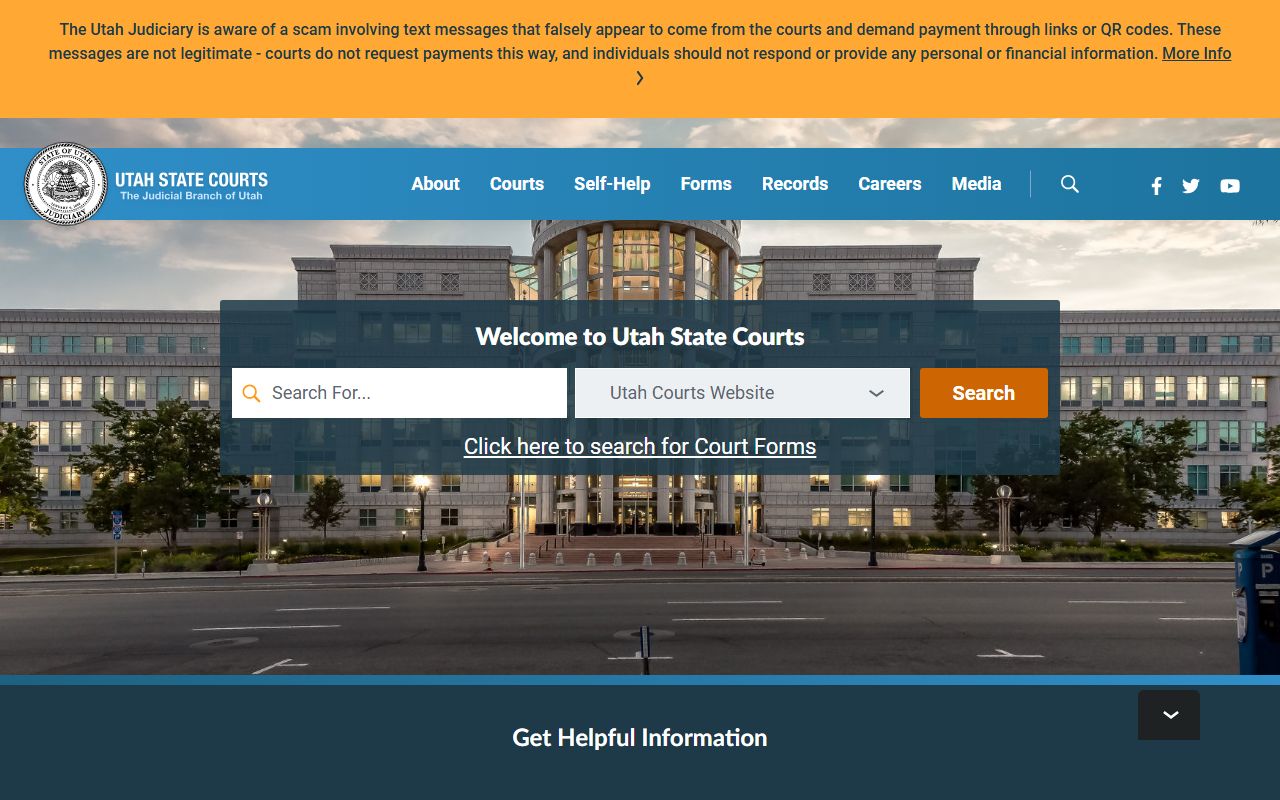
From there, the Xchange link opens the public case search used for most Utah County court records.
- Open Xchange and choose to search as a guest or log in to an account.
- Enter a party name or the case number from a notice or citation.
- Narrow the search by court location, such as Provo District Court.
- Review the docket entries, hearings, and case outcome.
- Request or buy a copy of a filed document if you need an official record.
The Xchange portal opens with options to search as a guest, log in, or set up an account.
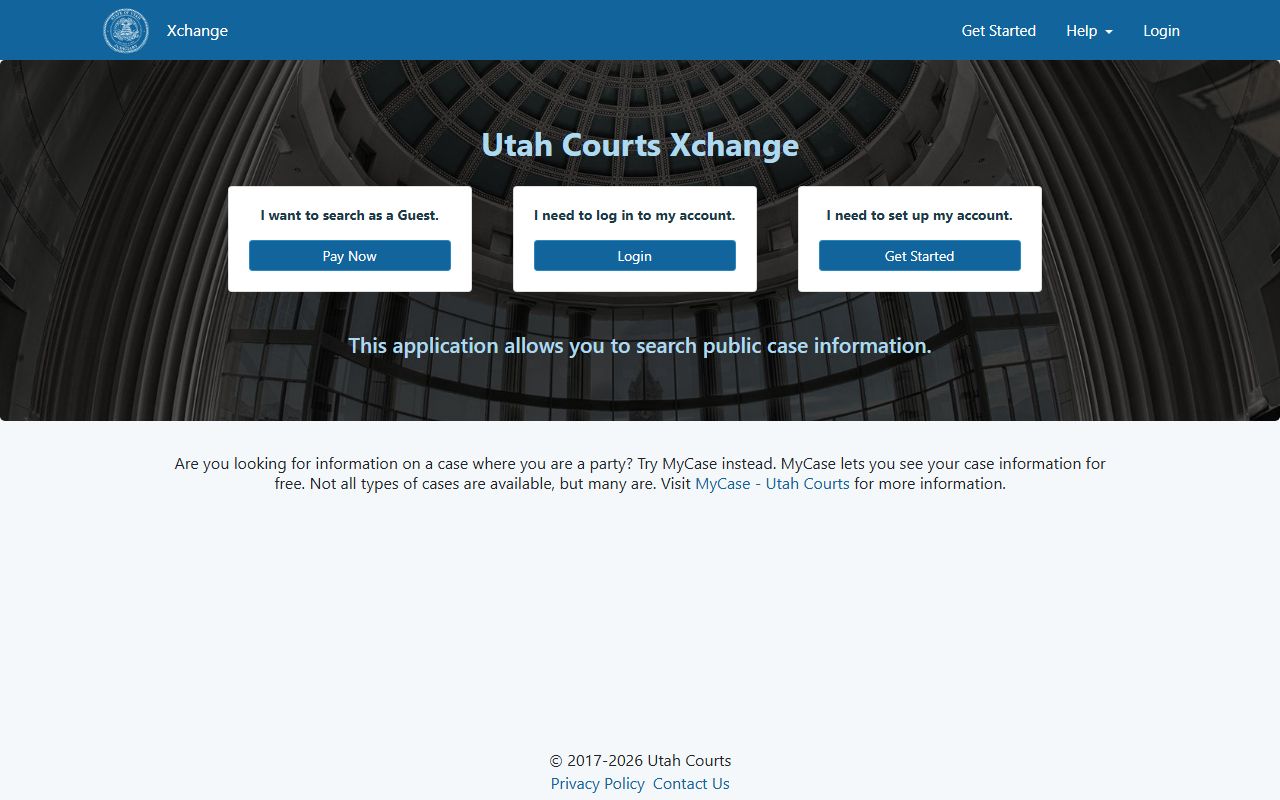
Guest access uses a Pay Now step, while parties to a case get free access through a different tool covered below.
The Utah County Judicial System
Utah County is part of the Fourth Judicial District, which it shares with Juab, Millard, and Wasatch Counties. The District Court is the general trial court. It hears felonies, class A misdemeanors, divorce and family cases, probate, guardianship, and major civil disputes. Appeals from the justice courts also land here. Above the trial courts sit the Utah Court of Appeals and the Utah Supreme Court. Below them, Justice Courts take traffic, infractions, small claims, and most class B and class C misdemeanors. Juvenile Court handles delinquency and child welfare, and those files are not public.
The Fourth District serves the county from three court buildings plus a county justice court. You can read the district's own overview on the Fourth Judicial District page.
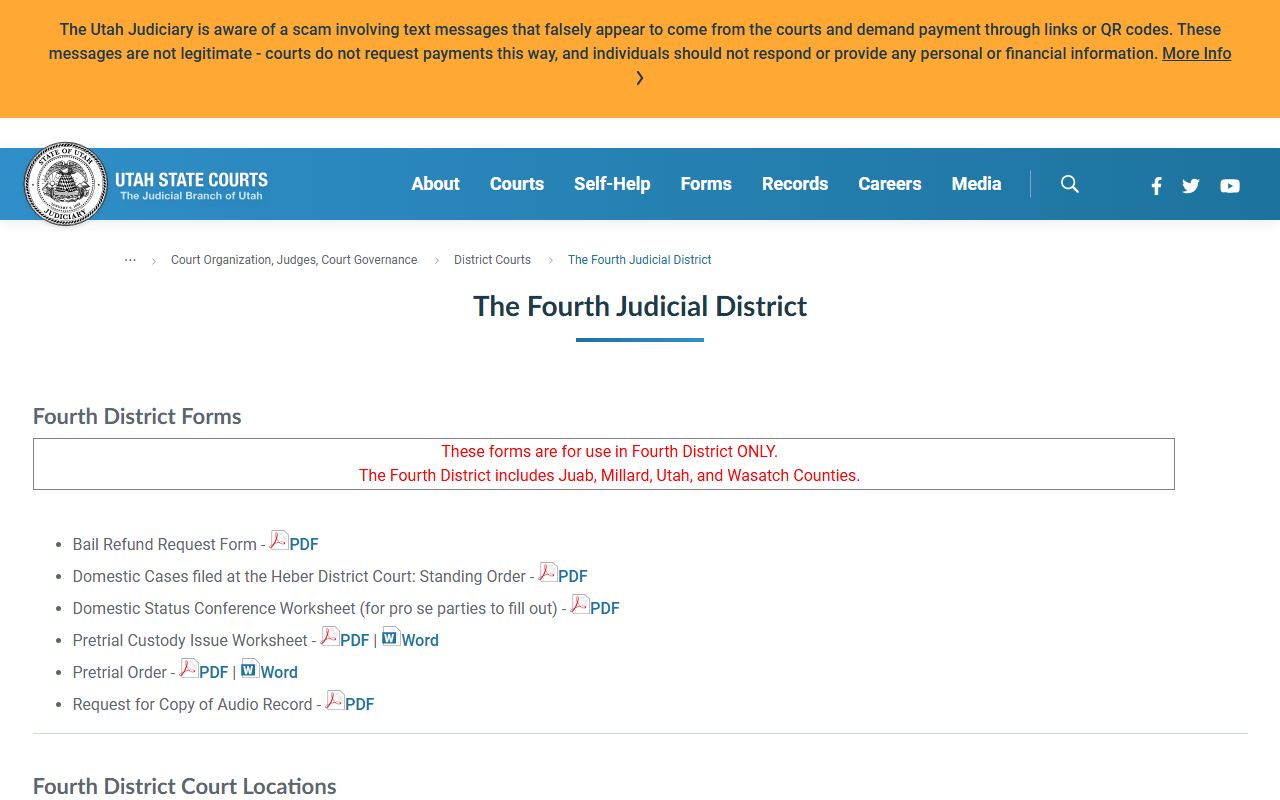
That page links to the local forms and court directories used across Utah County.
Case flow: Justice Court › District Court › Utah Court of Appeals › Utah Supreme Court
| Court | Jurisdiction | Case Types |
|---|---|---|
| Utah Supreme Court | Highest state appeals | Select direct appeals, constitutional matters, attorney discipline |
| Utah Court of Appeals | Intermediate appeals | Many appeals from district and juvenile courts |
| Fourth District Court | General trial court | Felony, class A misdemeanor, divorce, probate, major civil |
| Juvenile Court | Juvenile trial court | Delinquency, child welfare, termination of parental rights |
| Justice Courts | Limited jurisdiction | Traffic, infractions, small claims, class B and C misdemeanors |
For a deeper look at the trial level, see the Utah County District Court page.
Utah County Courthouses
The Fourth District Court serves Utah County from three buildings. Provo is the main site and holds the most courtrooms and judges. American Fork covers the north end of the valley. Spanish Fork serves the south end and shares a city with the county jail. Each building hosts both District Court and Juvenile Court hearings. The Utah County Sheriff provides security at all three, with bailiffs in each courtroom and a screening checkpoint at every door.
Provo Fourth District Court
137 North Freedom Blvd
Provo, UT 84604
801-429-1000
American Fork Fourth District Court
75 E 80 N #202
American Fork, UT 84003
801-804-4800
Spanish Fork Fourth District Court
775 W Center St.
Spanish Fork, UT 84660
801-756-9654
Note: Utah County Justice Court sits separately at 151 S University Ave #3300 in Provo and handles most traffic and small claims matters.
Types of Court Records Available in Utah County
Utah County court records cover the full range of cases the trial courts hear. The District Court produces criminal, civil, family, and probate files. The justice courts produce traffic, small claims, and lower misdemeanor files. Some records are open to anyone. Others are private or sealed under court rules, which is covered further down this page.
You can review the state's record overview on the Utah Courts records page.
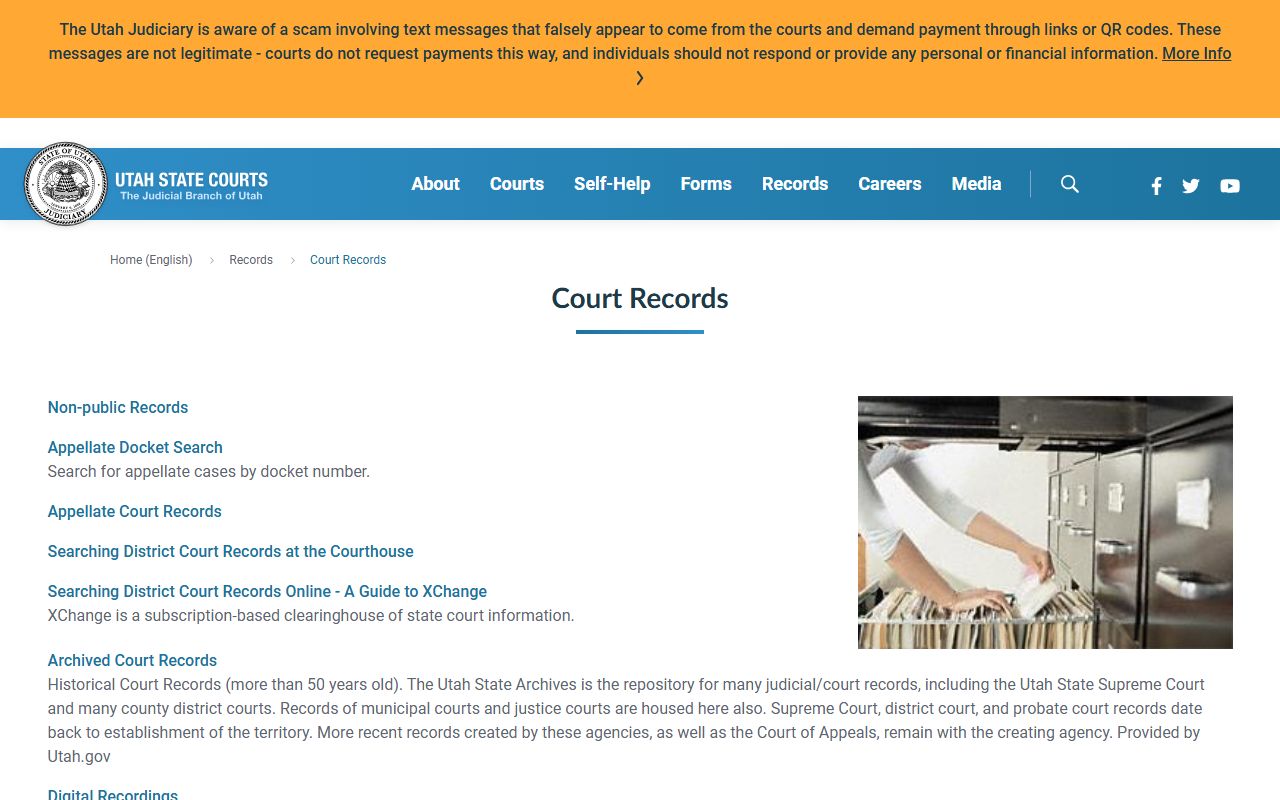
That page also links to appellate dockets, archived records, and audio recordings.
- Criminal records - felony and class A misdemeanor charges, pleas, and sentences in the District Court.
- Civil records - lawsuits over contracts, debt, property, and name changes.
- Family and divorce records - divorce, custody, support, and protective orders, with many parts kept private.
- Probate records - estates, wills, guardianships, and conservatorships.
- Traffic records - citations and driving offenses handled in justice court.
What Utah County Court Records Show
Public case systems show a standard set of fields. Xchange and the court calendars draw from the same case management system, so the data lines up across tools. A party to a case sees more through the free party tool, including filed papers and balances owed. The general public sees the summary docket.
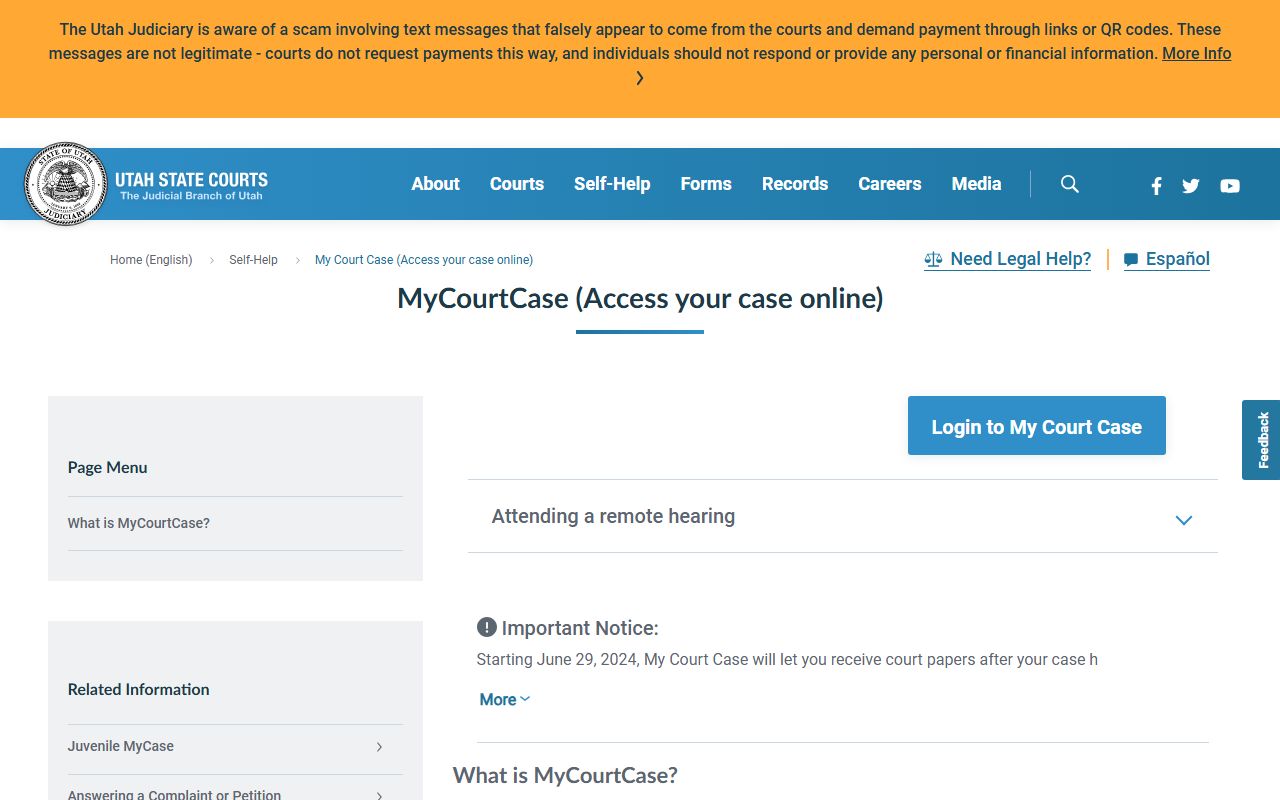
Parties can manage their own case through MyCourtCase, which shows case history and filed documents.
The table below lists the fields most often seen in a Utah County court records search.
| Field | What It Shows |
|---|---|
| Case Number | The unique number the court assigns to the case. |
| Filing Date | The date the case was opened with the court. |
| Parties | Names of the plaintiff or prosecutor and the defendant or respondent. |
| Charges / Cause | The offense charged or the basis of the civil claim. |
| Disposition | The current or final outcome of each charge or claim. |
| Sentence / Judgment | The penalty, money award, or order the court entered. |
Public Access Laws for Utah County Court Records
Two rule sets govern access. County, sheriff, and recorder records follow GRAMA, the Government Records Access and Management Act. Court case files follow the Utah Code of Judicial Administration, mainly Rules 4-202 through 4-202.08. The split matters. A request for a jail report goes through a GRAMA process, while a request for a court file goes through the court clerk. The result for the public is that case summaries are often searchable online, but full copies, audio, and non-public material need a formal request.
Key Statutes:
Utah Code § 63G-2-201 - gives anyone the right to inspect a public record and obtain copies during work hours.
UCJA Rule 4-202 - sets the open-court interests and the privacy interests that court records must balance.
UCJA Rule 4-202.02 - classifies court records as public, sealed, private, protected, or juvenile.
More detail on requests and fees lives on the Utah County public records page.
Records That Are Restricted or Confidential
Not every case is open. Xchange does not display sealed cases, adoptions, civil commitments, expunged cases, or juvenile delinquency, child welfare, and termination of parental rights matters. Under Rule 4-202.02, many domestic case records became private on April 1, 2012. That covers divorce, custody, support, paternity, civil stalking, guardianship, and conservatorship. Case histories, public hearing minutes, judgments, orders, decrees, and letters of appointment usually stay public unless a judge seals them.
To view a sealed or private record, an eligible person files a written request with the court clerk under Rule 4-202.04 and shows identification. If the court denies access, it sends information about the options. Expunged records follow a separate path under Utah's expungement law, which the Utah County arrest records page explains.
The state spells out what Xchange does and does not show on its Xchange information page.
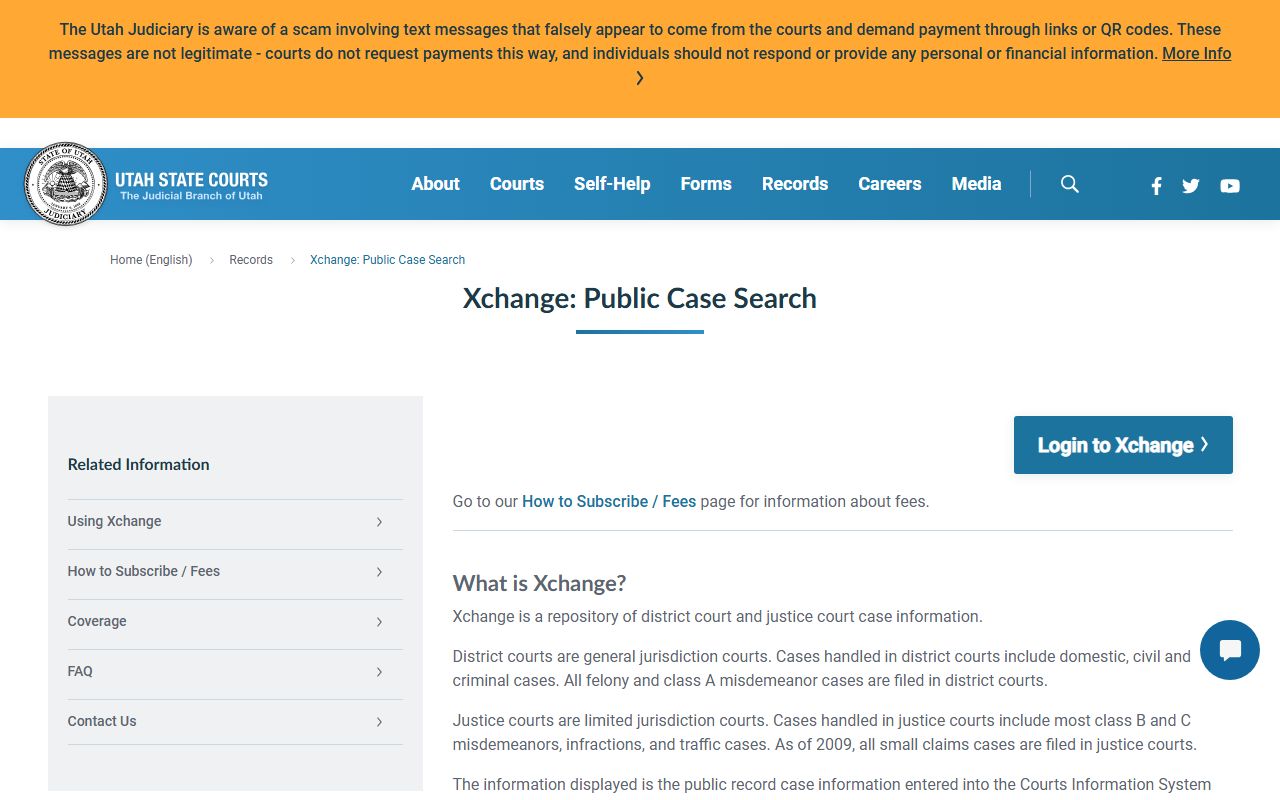
It confirms that sealed, expunged, adoption, and juvenile matters stay off the public search.
Specialty Courts in Utah County
Utah lists problem-solving courts as a statewide resource, and Utah County runs several jail-based programs that work as alternatives to plain custody. These programs feed court outcomes and reentry plans. The GPS Diversion Program lets a person live at home on an ankle monitor, report to jail weekly, and attend a class. The Work Diversion Program lets a sentenced person work supervised crews and pay weekly fees instead of sitting in a cell.
Inside the jail, the OUT Program provides short-term residential drug treatment through Wasatch Behavioral Health, about 20 hours a week for 13 weeks. The RISE program adds substance treatment plus community aftercare and mentoring. These programs shape who appears in the Utah County jail population on any given day.
Utah County Sheriff and Jail
The Utah County Sheriff's Office runs the county jail at the County Security Center in Spanish Fork and provides courthouse security across the Fourth District. Sheriff Mike Smith leads the office, with Shaun Bufton as Under Sheriff. The Corrections Division books and holds people, while the Support Services Division handles court security, civil process, and warrants. Booking information appears in the public inmate search 24 hours after booking.
For the roster, jail contacts, and the booking-code legends, see the Utah County inmate records page. For active warrants and the Fugitive Investigations team, see the warrant records page. Release dates and reentry tools sit on the released inmates page.
Marriage, Divorce, and Probate Records
Marriage licenses come from the Utah County Clerk, while divorce and probate cases live in the District Court. That split trips up many searchers. A marriage license search runs on the county site, but a divorce decree is a Fourth District Court record found through Xchange. For the full process, fees, and the digital marriage license system, see marriage and divorce records and probate records. The county clerk's other functions are covered on the Utah County Clerk page.
Probate cases use a handful of terms that show up across the file.
- Testator
- The person who made the will.
- Executor
- The person named to carry out the will, also called a personal representative.
- Conservator
- A person the court appoints to manage another adult's finances.
Utah County Court Records Fees
The court charges set fees for copies and staff time. The first 15 minutes of staff time are free. Records already on Xchange will not be faxed or emailed by the clerk, since you can pull them online. The fee list comes from the Utah Courts request a court record page.
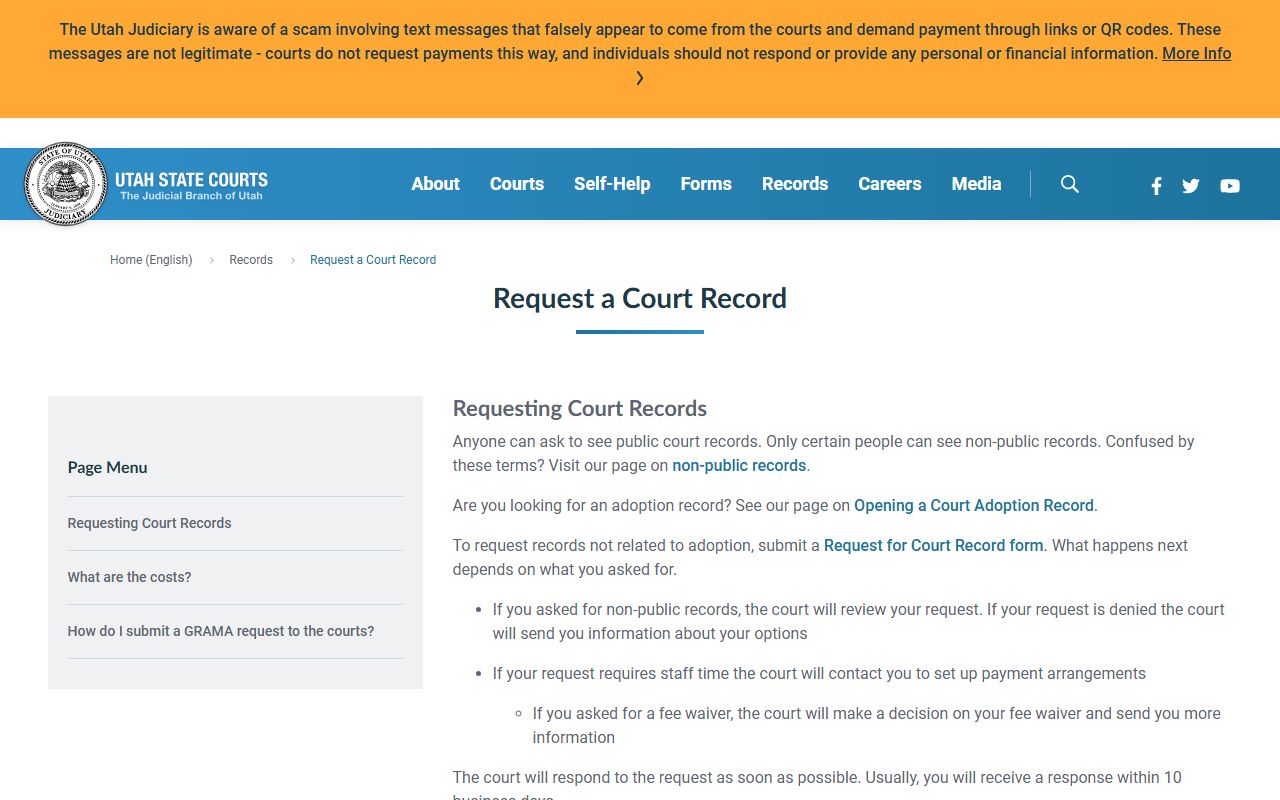
Use that page to submit a written request for copies, certified records, or non-public review.
| Item | Amount |
|---|---|
| Paper copies (per sheet) | $0.25 |
| Electronic storage media (per unit) | $15 |
| Fax or email, 10 pages or less | $5, then $0.50 per page |
| Clerk time after first 15 free minutes | $15 per hour |
How to Interpret Utah County Court Records
Reading a docket means knowing a few key terms. A charge is not a conviction. The disposition tells you the result. A plea of guilty, a dismissal, or a plea in abeyance each lead to a different outcome. A bench warrant means a judge ordered an arrest, often after someone missed a court date. Minute entries are the clerk's short summary of what happened at a hearing.
Justice court codes differ from district court codes. The sheriff's inmate system even publishes its own court-code legend, where DST means Provo District Court and JPC means Utah County Justice Court. When a code is unclear, the Utah County court dockets page breaks down docket entries in more depth.
Lower-level cases such as traffic and small claims appear through the Utah County Justice Court site.
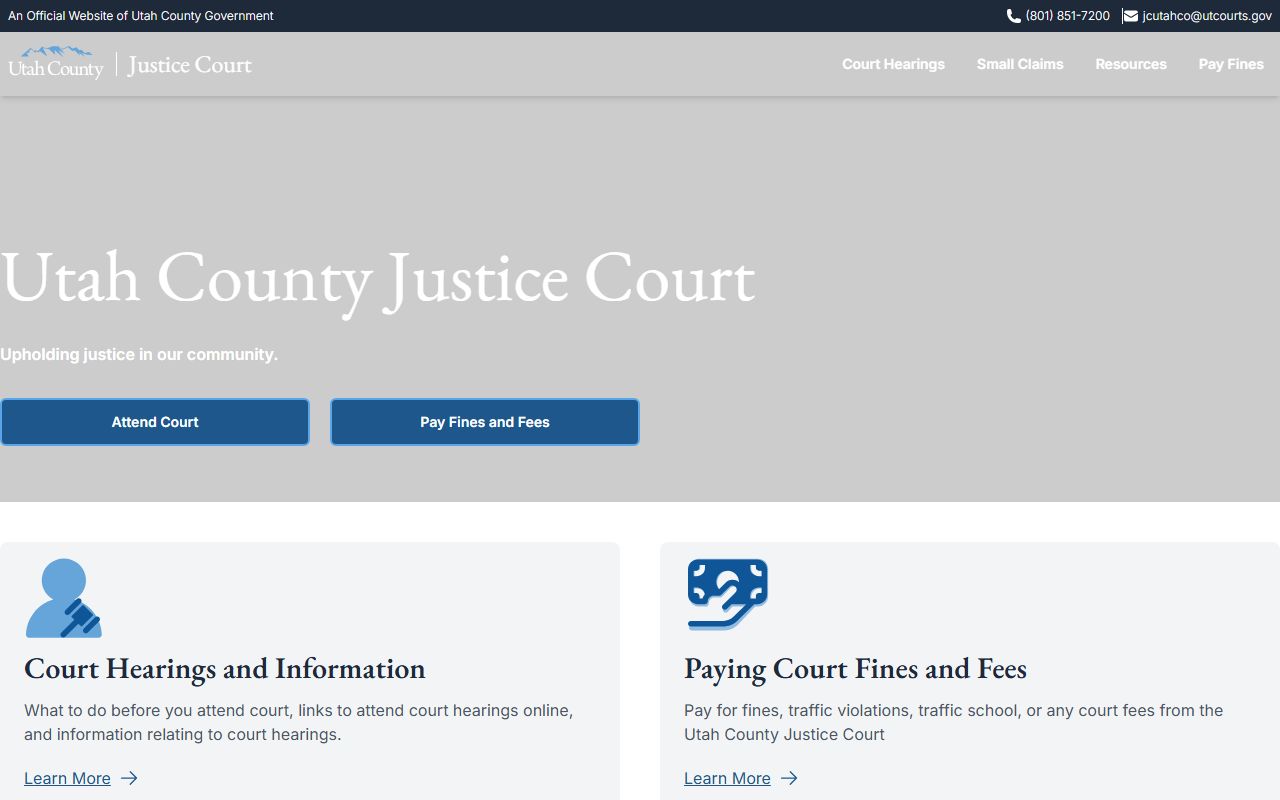
That court reads its own fines, traffic school, and small claims cases, which the traffic court records page covers in full.
Accuracy and Record Limitations
Online case data is only as current as the entries court staff make. Utah Courts says Xchange information is available immediately once staff enter it in the local system, and the calendars update on weekdays at 5:30 a.m. Still, a filing has to be accepted and keyed before it shows. Converted older cases may show less detail.
Note: Confirm any case detail with the court that holds the file before you rely on it for a legal or financial decision.
History of Utah County Courts
The Fourth District Court was formed in 1892 and has long served Juab, Millard, Utah, and Wasatch Counties. American Fork and Provo show up as Utah County court sites in the state archive's district history. Court records more than 50 years old may sit with the Utah Division of Archives and Records Service rather than the local court.
The county has moved steadily toward digital access. Most district courts adopted the CORIS case system by the end of 1998. District court documents filed electronically since July 1, 2010 can be bought through Xchange. The county also built the first fully online marriage license portal in the state. Upcoming hearings appear on the Utah court calendars.
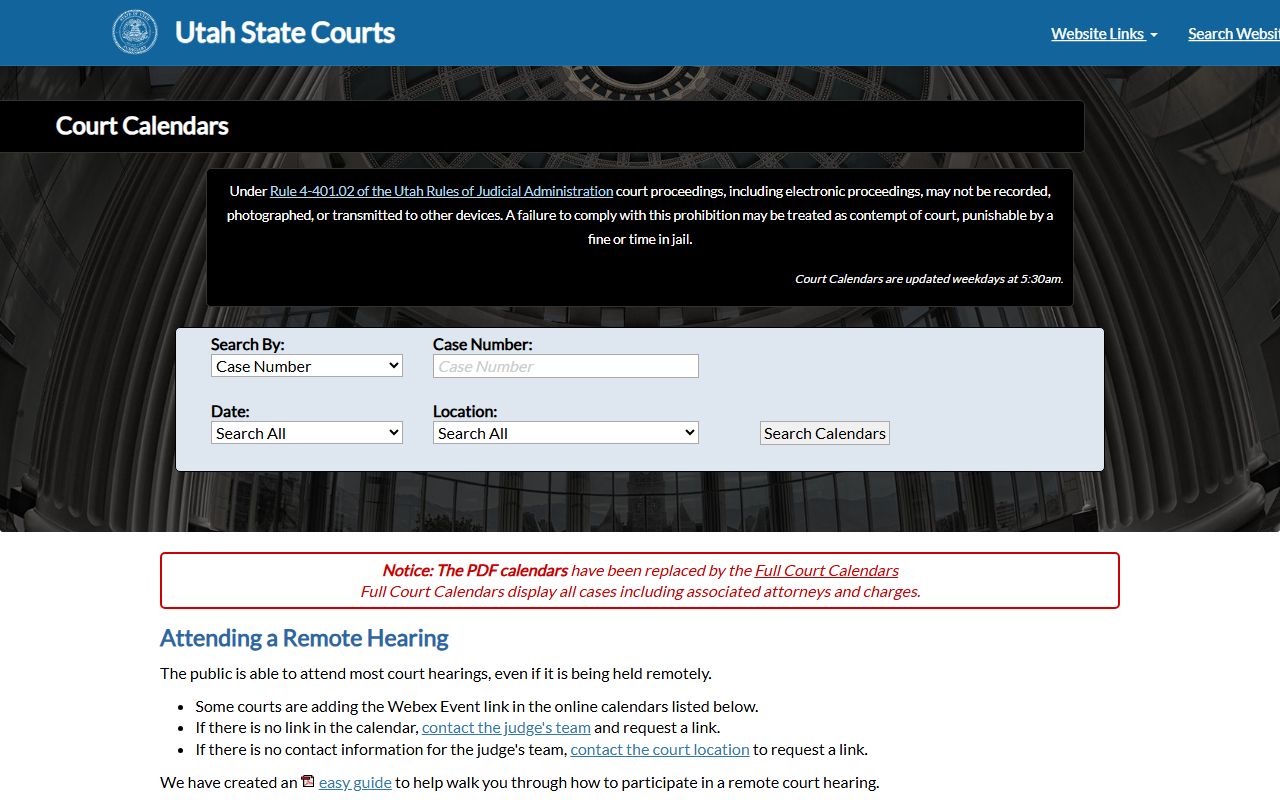
The calendar tool searches by case number, party, judge, attorney, date, and court location.
Frequently Asked Questions
How do I search Utah County court records online?
Use Xchange for public district and justice court case information. It shows parties, judges, attorneys, documents filed, hearings, judgments, and case outcomes. If you are a party to the case, use MyCourtCase instead, since it is free and shows your own case history and filed papers. The court calendars are best when you just need an upcoming hearing date.
Where is the main Utah County district courthouse?
The Provo Fourth District Court and Fourth District Juvenile Court are at 137 North Freedom Blvd, Provo, UT 84604. The Sheriff's Judicial-Courts Bureau lists the phone as 801-429-1000 and reports 16 courtrooms with bailiffs assigned to each one. American Fork and Spanish Fork hold the county's other Fourth District courtrooms.
Are Utah County divorce records public?
Only in part. Many domestic case records became private under Rule 4-202.02 in 2012. Case histories, public hearing minutes, judgments, orders, and decrees usually stay public unless a judge seals them. Parties can see the full file through MyCourtCase, and certified copies come from a court-record request.
More on the Utah County Court Records FAQ page.