
How to Find Recently Released Utah County Inmates
Start with the Utah County Arrested Person Search. A booking page shows a release date when one applies, along with a status code. Status O means the person was released. The release type code then tells you how, whether by cash bail, a bail bond, a promise to appear, release by a judge, time served, or a move to another facility. Because the roster keeps booking information for one year, you can often confirm a recent release even after the person is gone.
Release does not happen the instant a judge signs an order. The jail says a release can take two to eight hours after the Records Clerks receive the paperwork. A person may be released by paying bail or a fine, by using a bail bond company, or by a release order from the court. The jail states it cannot refer people to a bondsman. If the online information is not clear, you can call the Utah County Jail at 801-851-4302. The jail's orientation page explains how release, property return, and paperwork work.
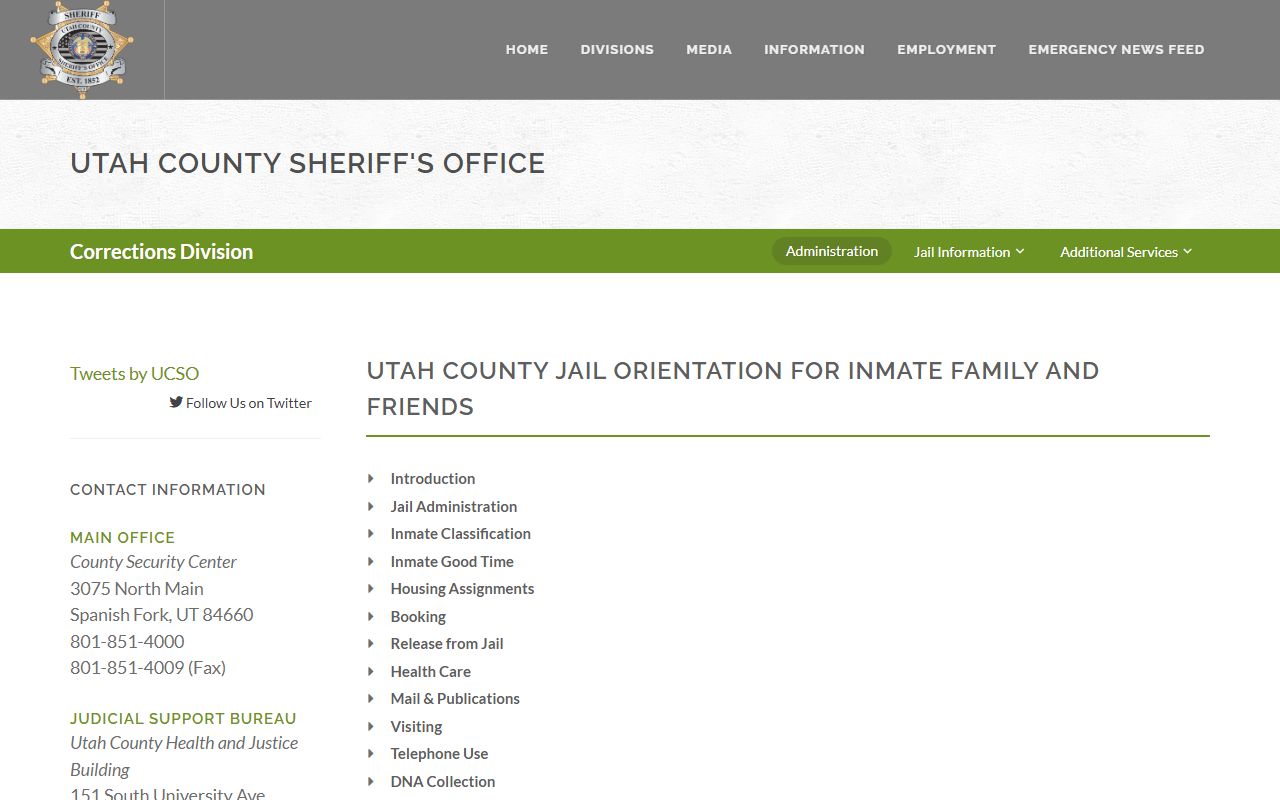
The orientation page notes that family or friends may pick up property the inmate had at booking, except clothing and money. Mail that arrives after a release is returned to the sender, and mail with no return address goes to the post office for handling.
What Utah County Release Codes Mean
A booking page does not just say "released." It carries a short release type code that tells you why a person was let out. Reading the code saves a phone call. The most common release codes on the Utah County roster are listed below.
- B / BN
- Cash bail posted, or a bail bond was posted through a bondsman.
- PTA
- Promise to appear. The person signed a written promise to come to court.
- ROJ / ROP
- Released on own recognizance by a judge, or released on points.
- T
- Time served. The person completed the time owed.
- USP / INS
- Moved to the Utah State Prison, or picked up by immigration.
- CD
- Charge dropped, so the hold ended.
A code like USP or INS means the person left county custody for another system, so the county roster will stop tracking them.
Setting Up Release Notifications
If you want to know the moment a person's custody changes, register for alerts through VINELink. It is the national victim notification system, and it can send a call, text, or email when a status changes at a participating agency. Availability depends on whether the agency and record type take part. The steps below set up a basic alert.
- Open VINELink and choose Utah as the state or agency.
- Search by the person's name or custody record.
- Register for notifications by phone, text, or email and confirm your contact details.
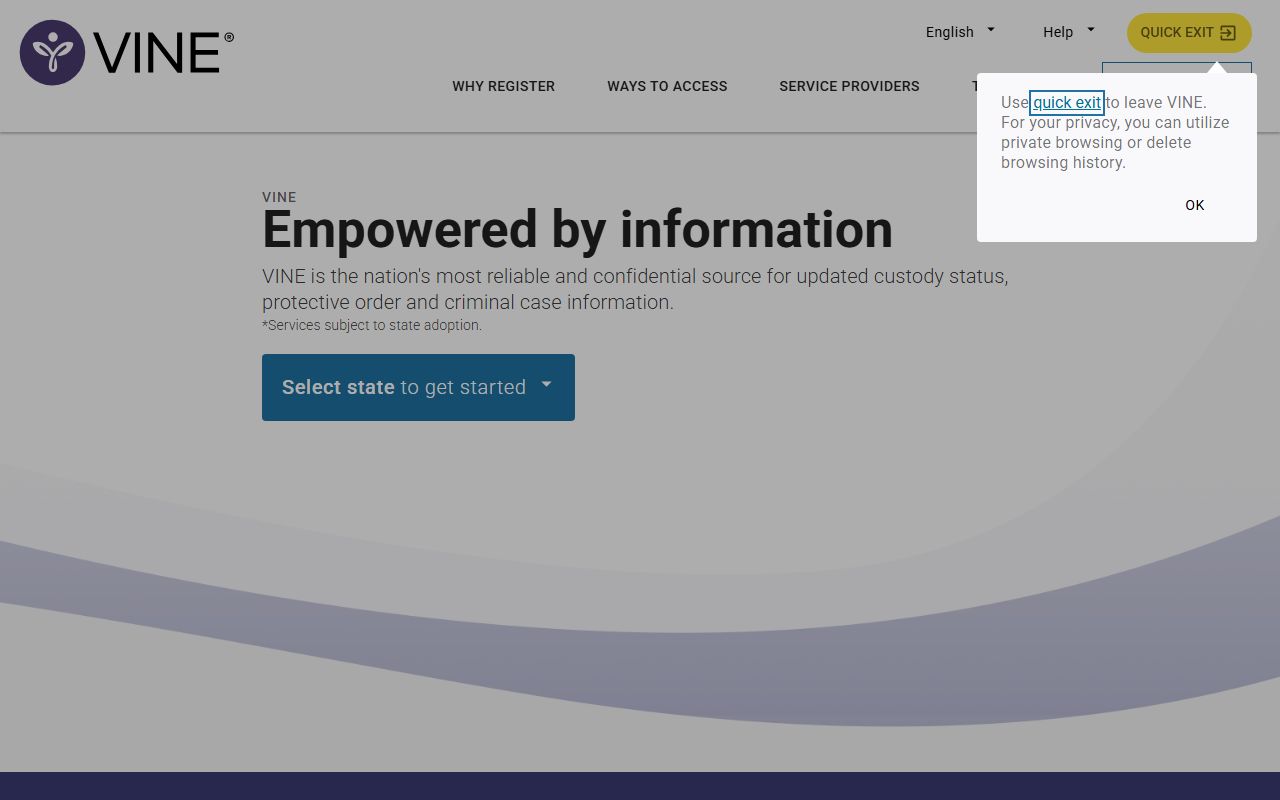
VINELink is the tool to use when you cannot keep checking the roster yourself.
Searching the Utah Department of Corrections
County jail release is not the same as state custody status. If a person was sentenced to the Utah State Prison or is on state probation or parole, the Utah Department of Corrections is the right source. Its offender search covers sentenced offenders and supervision context. A county jail detainee may not appear there if they are not in state custody. The table lists the basic search options.
| Field Label | Type | Required | Notes |
|---|---|---|---|
| Offender Name | Text | Conditional | Typical search by the offender's name. |
| Offender Number | Text | Conditional | Used when a state offender number is known. |
You can run the search on the Utah DOC offender search.
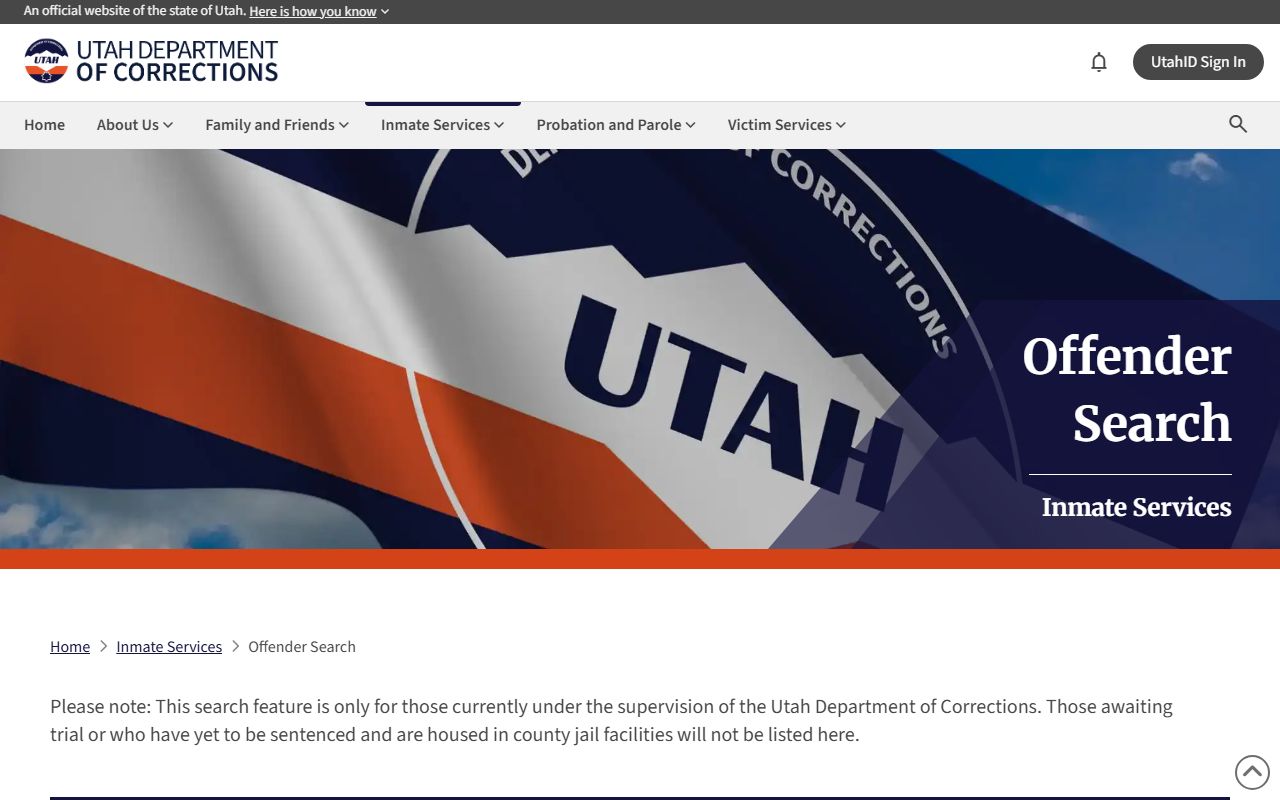
Use this locator for anyone who has moved from the county jail into the state system.
Federal Bureau of Prisons Locator
Some people from Utah County end up in federal custody rather than county or state custody. The federal Bureau of Prisons runs an inmate locator that searches by name or by a federal number. It is the right tool for a federal case, since federal inmates do not appear on the county roster or the state locator. The table shows the main search fields.
| Field Label | Type | Required | Notes |
|---|---|---|---|
| Last Name | Text | Conditional | Used under Find By Name with first and middle name. |
| BOP Register Number | Text | Conditional | Used under Find By Number, along with DCDC, FBI, or INS number. |
| Age / Race / Sex | Filters | Optional | Narrows a name search. |
Search the federal locator at bop.gov/inmateloc.
Verifying a Release in Person or by Phone
When an online record is unclear, a phone call settles it. The Utah County Jail can confirm whether a person is still in custody. Call the jail at 801-851-4302 with the person's name and, if you have it, the booking number. For state cases, the Utah Department of Corrections is the contact, and for federal cases it is the Bureau of Prisons. Keep in mind that release paperwork can take a few hours to process, so a very recent change may not show right away.
The inmate records page explains how to read the status and release codes on a booking, which often answers the question without a call.
Utah Sex and Kidnap Offender Registry
After release, some offenders must register on the Utah Sex and Kidnap Offender Registry. The registry is a public search and is separate from the jail roster. You can search by name or near an address, and it shows registration details for listed offenders. A terms acknowledgement is usually required before results appear. The table lists the common search options.
| Field Label | Type | Required | Notes |
|---|---|---|---|
| Name Search | Text | No | Public search by offender name. |
| Address / Radius | Text / Map | No | Search near an address or community. |
| City / ZIP / County | Text | No | Narrows a geographic search. |
| Terms Acknowledgement | Checkbox | Likely required | Accept the disclaimer before results show. |
The registry is at the Utah official records site. A profile can include a photo, address or compliance location, offense information, and a physical description.
Parole and Probation Information
Parole and probation are forms of supervised release. Parole is supervised release from prison. Probation is a supervised sentence served in the community. In Utah, supervision context for state offenders is handled through the Utah Department of Corrections, which is why the same offender search is the starting point for parole and probation status. The county jail roster does not track state supervision, so a person who is out on parole will not show as in custody on the county system.
If you need to report a concern about someone on supervision, the Utah Department of Corrections is the agency to contact through its offender search and main resources. For the warrant side of a violation, the warrant records page covers how warrants are issued and cleared.
Reentry Resources in Utah County
Release is the start of reentry, and Utah County has a network of help. The Sheriff links to a transitional resources tool meant for released inmates, their families, and the people who work with them. Jail programs also build a discharge plan that connects a person to housing, food, counseling, and job help before release. The groups below appear in the county's discharge planning.
- Utah County Reentry, the Sheriff's transitional resources tool.
- Department of Workforce Services for job and benefit help.
- Community Action, Turning Point, and the Food and Care Coalition for basic needs.
- The Gathering Place and temporary staffing services for shelter and short-term work.
- District adult education and apprenticeship programs for training.
You can reach the Sheriff's tool at utahcountyreentry.org. The jail's RISE program adds aftercare and mentoring, with help for transportation and housing, and its UDOWD program works on workforce development to lower the chance of reoffending. The Life Skills discharge planning class lines up these resources before a person walks out the door.
Expungement After Release
Once a case is over, some people want the record cleared. Utah lets eligible criminal records be expunged, which removes them from public Utah criminal history. The path runs through the Bureau of Criminal Identification for a Certificate of Eligibility, then through the court for a signed order. Traffic-only cases go straight to the court that handled them. The full process, with the statutes and the status portal, is on the arrest records page.
Note: A release date on the roster does not clear a record; expungement is a separate step handled through BCI and the court.