
How to Search Utah County Court Records
Xchange is the main public search for Utah County court records. Utah Courts calls it the repository of district court and justice court case information. It shows party names, addresses where available, assigned judges, attorneys of record, documents filed, hearings held, judgments, and case outcomes. Guest access runs through a Pay Now flow. A subscription account is also available. If you are a party to the case, skip Xchange and use MyCourtCase, which is free.
MyCourtCase is the better path for a party. It is free and works for almost any open or closed district or justice court case, though involuntary commitment and essential treatment cases are excluded. To set up an account you need an email address, the case number, and a government-issued ID. It shows your case history, the papers filed, scheduled hearings, and any fines or fees owed.
Before you begin, collect a party name or, better, a case number. Pick the court location too, since the dropdown narrows results fast. The state's self-help center walks new users through the tools and forms.
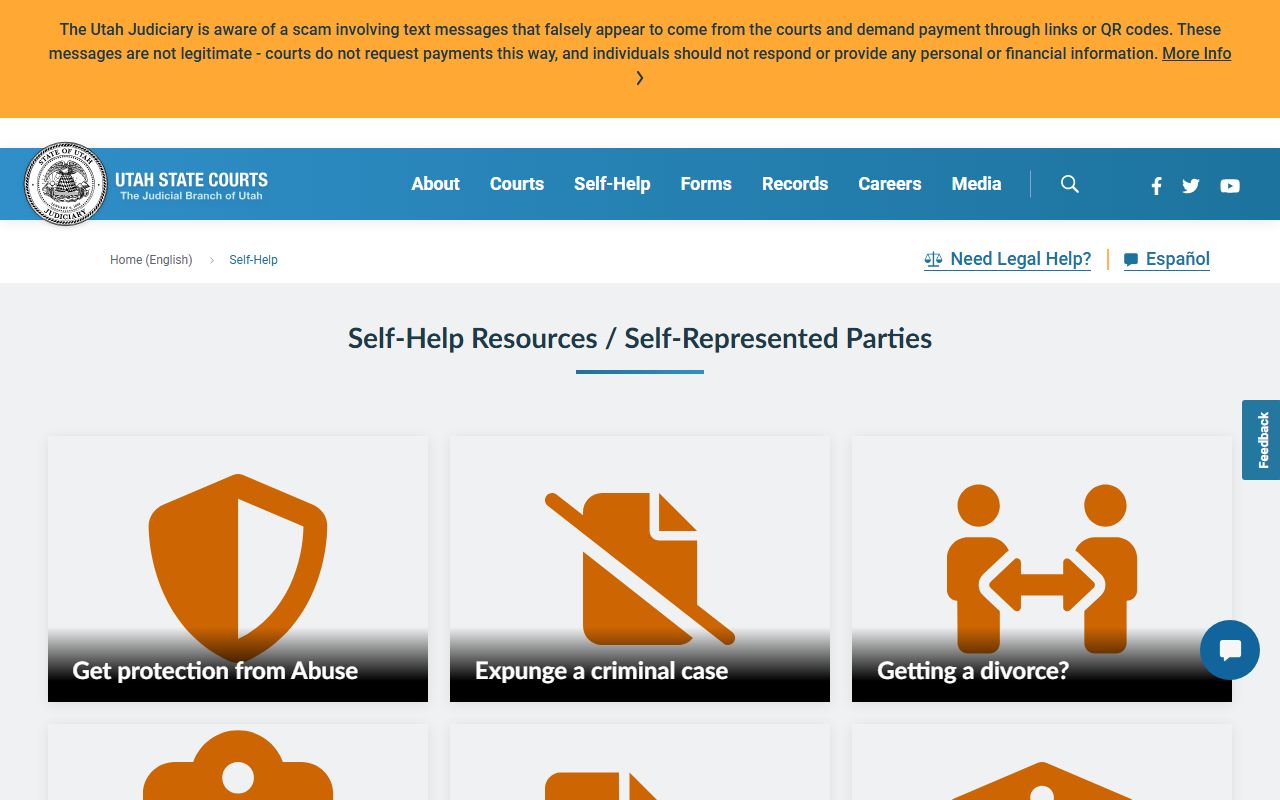
The self-help pages also link to MyCourtCase, fee waivers, and the record-request form.
- Open Xchange and choose guest search or account login.
- Enter a party name or the case number from your notice.
- Set the court location, such as Provo District Court or Utah County Justice Court.
- Open the case to read the docket, hearings, and outcome.
- Buy a filed document image or request a certified copy if you need an official record.
Utah County Court Records Search Fields
The public Xchange page gates the full search behind a guest payment or an account, so the first screen mostly offers access choices. Once inside, the portal supports name, case, court, and date style lookups. The table below lists the access controls you see when Xchange first loads.
| Field Label | Type | Required | Notes / Format |
|---|---|---|---|
| Search as a Guest | Action | Optional | Starts the public case search with a Pay Now step. |
| Pay Now | Button | Conditional | Payment step for guest access. |
| Log in to my account | Action | Optional | Existing subscriber or account access. |
| Set up my account | Action | Optional | New account or subscription path. |
| Get Started | Button | Conditional | Opens the account setup flow. |
For upcoming hearing dates without a paid search, the free court calendars search by case number, party, judge, attorney, date, and court location. The Utah County court dockets page breaks down those calendar fields.
Types of Utah County Court Records
Record type follows the court. The District Court produces the most serious files. The justice courts handle high-volume local cases. Access depends on the record's classification under court rules and on any judge's order to seal or close a file.
All felony and class A misdemeanor cases are filed in the District Court. The justice courts handle most class B and class C misdemeanors, infractions, and traffic cases, and they have taken all small claims since 2009. A small claims case in Utah County cannot ask for more than $20,000. Both court levels feed into Xchange, so a single name search can surface district and justice court matters together.
The list below shows the main categories you can search in Utah County court records.
- Criminal district records - felony and class A misdemeanor charging papers, pleas, minute entries, and judgments.
- Civil records - tort, contract, debt, property, and name-change cases with orders and judgments.
- Family and divorce records - divorce, custody, support, paternity, and stalking injunctions, many parts private.
- Probate records - estates, wills, guardianships, conservatorships, and letters of appointment.
- Justice court and traffic records - class B and C misdemeanors, infractions, citations, and small claims.
What Utah County Court Records Show
A public case file shows a standard set of fields drawn from the Courts Information System. Documents filed in district court electronically since July 1, 2010 can be bought through Xchange. Older or paper-only files may need a clerk request. The inventory below reflects the fields visible in a typical Utah County court records search.
| Field | What It Shows |
|---|---|
| Case Number | The court-assigned number that identifies the case. |
| Court Location | Provo, American Fork, Spanish Fork District, or a county or city justice court. |
| Case Type | Civil, domestic, criminal, probate, small claims, traffic, or infraction. |
| Parties and Attorneys | Plaintiff or prosecutor, defendant or respondent, and counsel of record. |
| Judge or Commissioner | The assigned judge, commissioner, or hearing officer. |
| Case History | Documents filed, hearings held, judgments, orders, and minute entries. |
| Disposition | The outcome of each charge or claim in a completed case. |
Public Access Framework for Utah County Court Records
Court case files follow the Utah Code of Judicial Administration, not GRAMA. Rule 4-202 sets the open-court interests, such as accountability and public notice, against privacy and safety interests. County and sheriff records, by contrast, use the GRAMA process under Utah Code § 63G-2-201, which gives anyone the right to inspect a public record and get copies.
Anyone can ask to see a public court record. Only certain people can see a non-public record, and they must show identification under Rule 4-202.04. The court usually responds to a record request within 10 business days. You can read the open and closed record purposes in UCJA Rule 4-202.
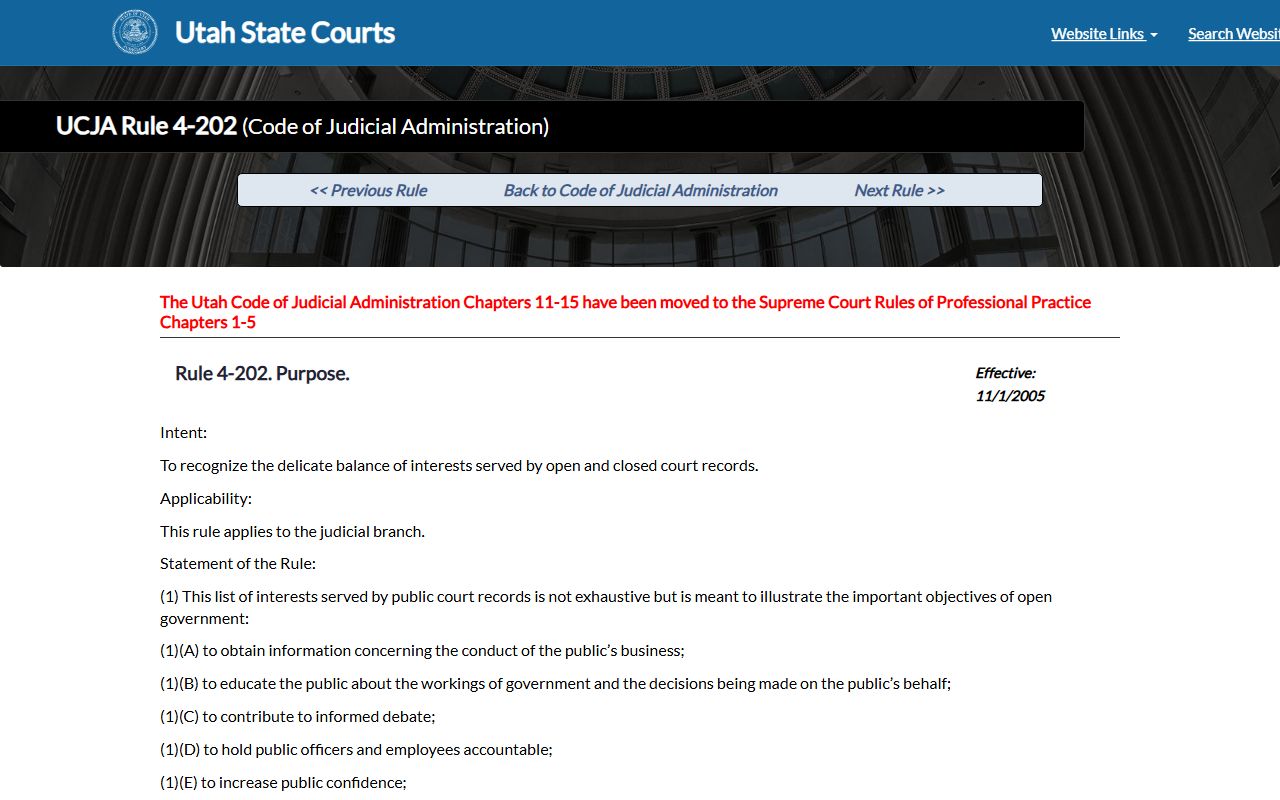
The rule frames why some Utah County court records stay open while others are limited.
Note: Public summary information is often online, but certified copies, audio, and non-public review still take a written request to the court.
Records That Are Sealed or Confidential in Utah County
Rule 4-202.02 classifies court records as public, sealed, private, protected, or juvenile. Xchange does not show sealed cases, adoptions, civil commitments, expunged cases, or juvenile delinquency, child welfare, and termination of parental rights matters. Many domestic records became private in 2012, including divorce, custody, support, paternity, guardianship, and conservatorship. Presentence reports and victim impact statements are protected. You can review the classifications in UCJA Rule 4-202.02.
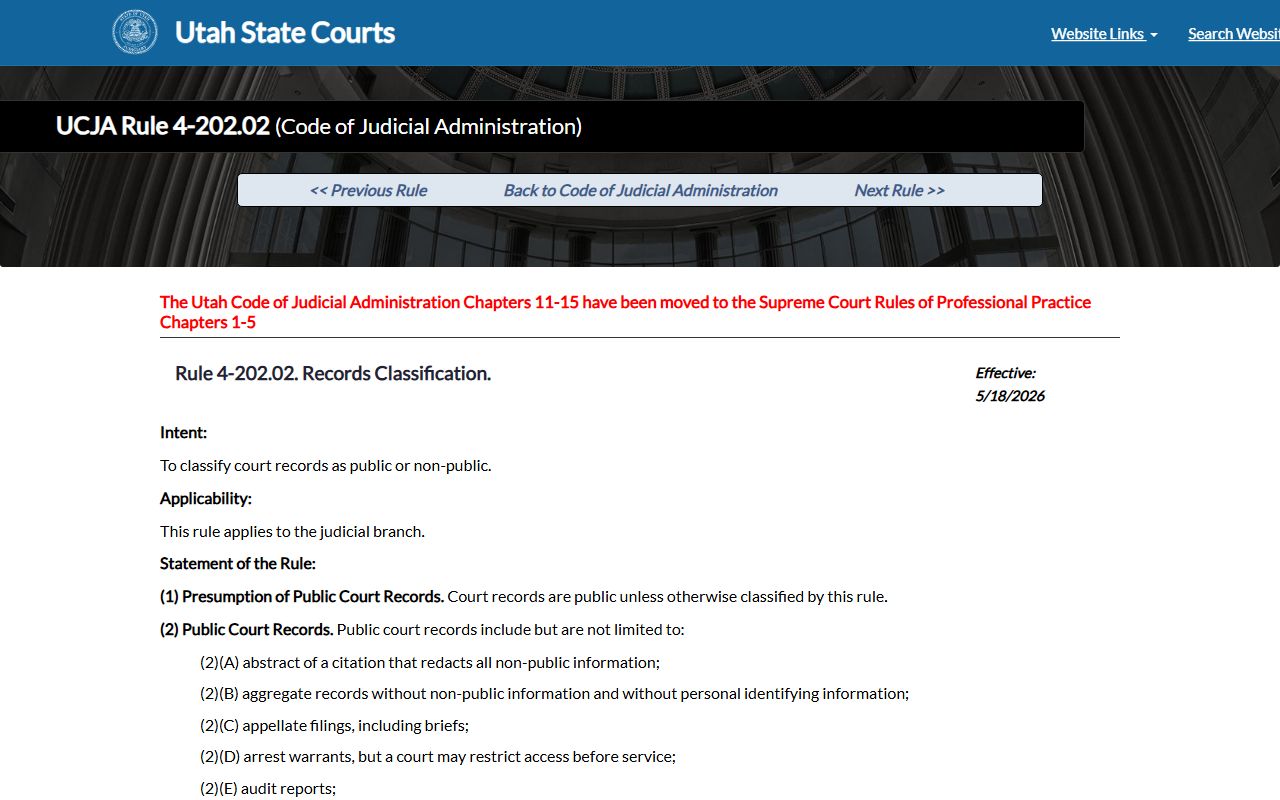
The classification rule is the key to knowing which parts of a file you can see.
To open a sealed or private record, an eligible person files a written request with the clerk and explains the legal basis. The court reviews the request and, if it denies access, sends the requester information about the next options. Expunged criminal records follow Utah's expungement law, which the arrest records page covers.
In-Person Court Record Requests
When a record is not online, you can use a public terminal at most district court locations or file a written request. Bring the case number, the party names, and a photo ID for any non-public review. The clerk reviews non-public requests under Rule 4-202.04, as shown on the access request rule page.
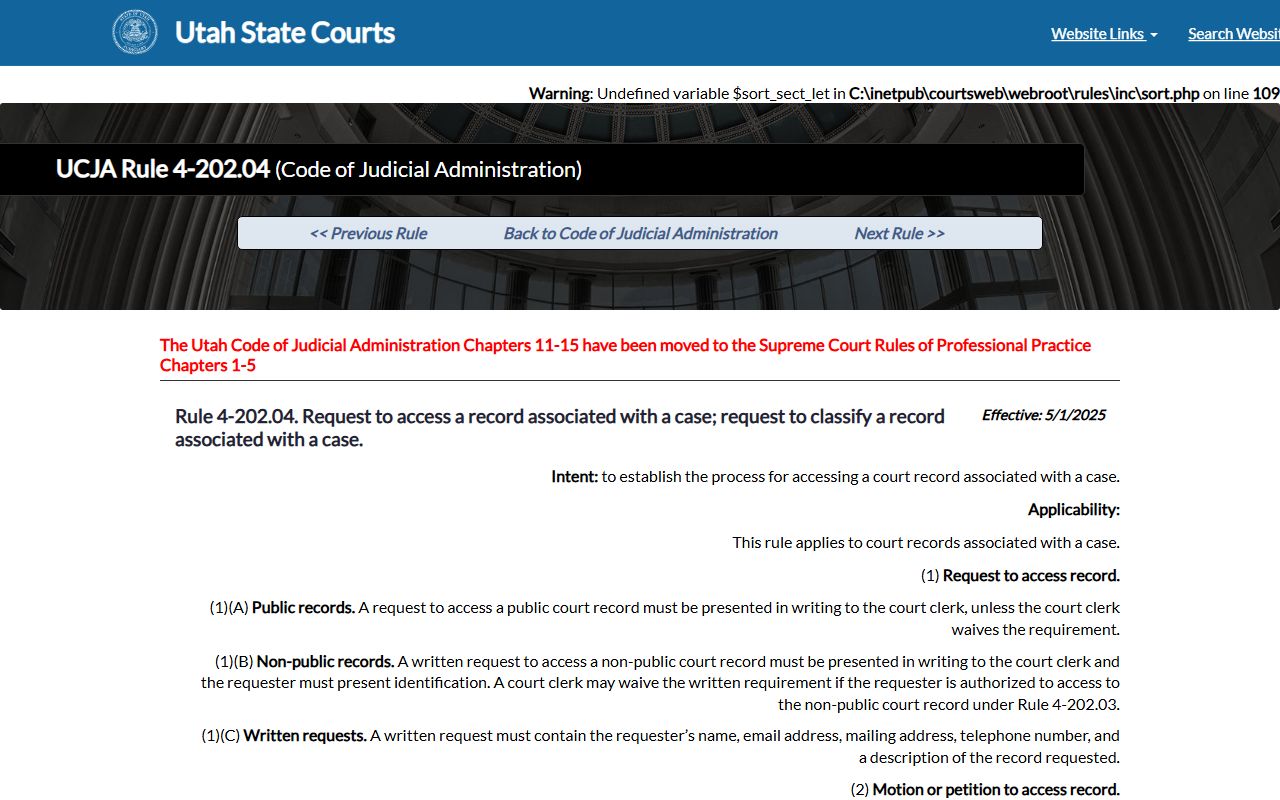
The same rule explains who may request a private or protected case record.
Provo Fourth District Court
137 North Freedom Blvd
Provo, UT 84604
801-429-1000
Mon-Fri 8:00 a.m.-5:00 p.m.
Federal and Out-of-County Cases
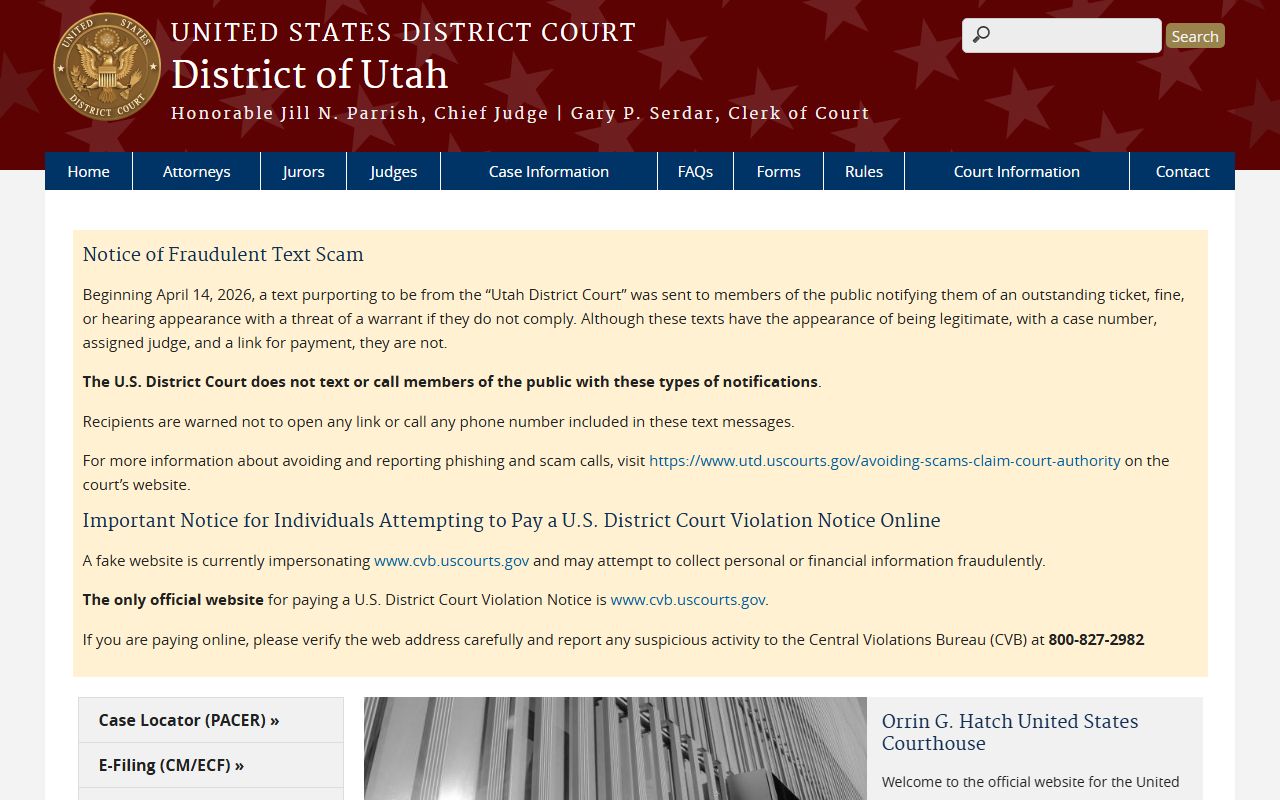
Not every case from Utah County is a county case. Federal matters go to the U.S. District Court for the District of Utah. Bankruptcy goes to the U.S. Bankruptcy Court for the District of Utah in Salt Lake City. These files are not in Xchange. You search them through the federal system instead.
The federal trial court for the area is the U.S. District Court for the District of Utah.
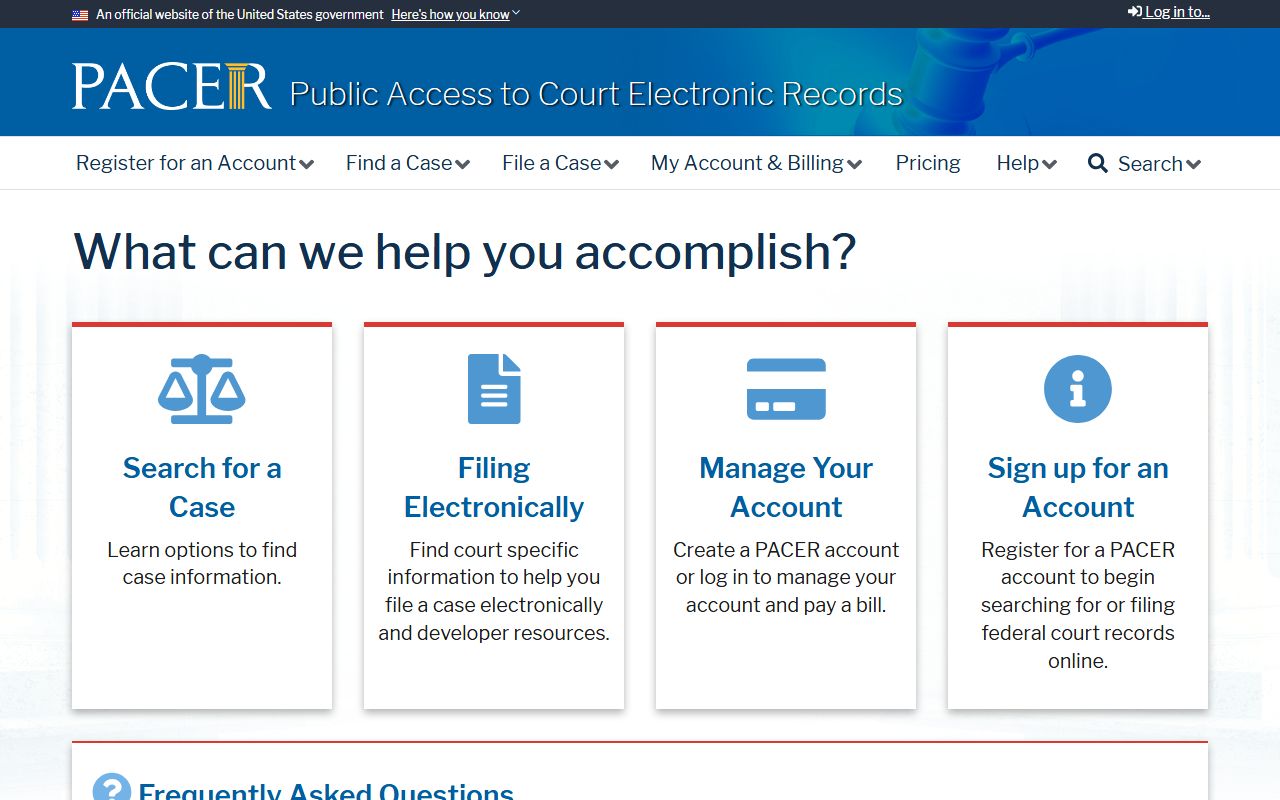
Official federal dockets and documents are available through PACER.
For free federal opinions and many docket documents, CourtListener and its RECAP archive are an alternative to PACER.