
Arrest Records in Utah County
Arrest records in Utah County are created by law enforcement at the point of booking. The Utah County Sheriff's Office, led by Sheriff Mike Smith, runs the county jail at the County Security Center in Spanish Fork and publishes booking information to the public. City police agencies across the county also make arrests, and people they book into the county jail show up in the same Sheriff's system. An arrest record marks that a person was taken into custody and the charges listed at booking. It does not decide guilt.
An arrest record is different from a criminal court record and different again from a conviction record. The arrest record is the Sheriff's booking file. The court record begins when the Utah County Attorney files charges and the case opens in court. The conviction, if it comes, is the outcome the court enters later. This page leads with arrest and booking records. For the full case history once charges are filed, the Utah County court records page covers Xchange and the court file.
How to Search Utah County Arrest Records
The main tool is the Utah County Arrested Person Search on the Sheriff's website. You can search by name or by arrest date, or open the current inmates list. Booking information appears about 24 hours after a person is booked. A name search covers all inmates, current and past, from the last two years. Click a name to open the actual booking page. The steps below walk through a basic search.
- Open the Utah County Arrested Person Search.
- Pick Search By Name and type as much of the name as you can, such as "ADAMS, B", to limit the results.
- Or pick Search By Arrested Date if you know roughly when the arrest happened.
- Open a result to see the booking, charges, arresting agency, and status code.
For a statewide criminal history rather than a single booking, you use the Utah Bureau of Criminal Identification. That record pulls together a person's full Utah criminal history and is covered further down this page. To find someone still held today, the inmate records page explains the jail roster in depth.
Who Prosecutes Utah County Criminal Cases
After an arrest, the decision to file charges belongs to the prosecutor, not the police. The Utah County Attorney's Office, led by County Attorney Jeff Gray, investigates and prosecutes crime in the county, supports crime victims, and represents county government. The office runs a Major Crimes Division and a Special Victims Unit. Charges may be filed at the felony or misdemeanor level, or the office may decline to file, which is why an arrest does not always become a court case.
You can read about the office and its priorities on the Utah County Attorney site.
Victims of violent and felony crimes get help from Victim and Witness Coordinators, who act as liaisons with the deputy county attorneys and help arrange services during prosecution.
People who cannot afford a lawyer can ask the court for appointed counsel. The Utah County Public Defender is appointed by the Fourth Judicial District for state cases, and assignment depends on income.
Arrest Records vs. Criminal Court Records
An arrest record and a criminal court record describe two different stages. The arrest record is made at booking by the Sheriff or police. The court record starts later, only if a prosecutor files charges, and it lives with the court clerk. The table below sets the two side by side.
| Arrest Record | Criminal Court Record | |
|---|---|---|
| Source | Utah County Sheriff or city police | Fourth District or justice court clerk |
| Created When | Booking into the jail | Charges filed by the prosecutor |
| Contents | Booking info, charges, mugshot, status | Pleadings, motions, hearings, disposition |
| Where to Search | Sheriff's Arrested Person Search | Xchange or MyCourtCase |
All felony and class A misdemeanor cases are filed in district court. Most class B and class C misdemeanors and infractions are justice court matters.
Charges vs. Convictions
This is the most important point on the page. Being charged is not the same as being convicted. A charge is an accusation. A conviction is the result after a plea or a verdict. A booking can show charges that the court later drops, reduces, or never convicts on. Read a charge as a claim, not a finding.
| Charge | Conviction | |
|---|---|---|
| Stage | Accusation at arrest or filing | Verdict or guilty plea |
| Burden of Proof | Probable cause | Beyond a reasonable doubt |
| Public Record | Yes, while open | Yes, unless expunged |
| Final? | No | Yes, subject to appeal |
To follow what happened to a charge after the arrest, check the case disposition through the court file. The court dockets page shows how to read that outcome.
Mugshots and Booking Photos
The Sheriff's Arrested Person Search shows a booking photo for the first 30 days after an arrest. After 30 days the picture comes off the site. The remaining booking information stays for one year, then drops from the public search. A booking page can show the arrest date, booking date, booking number, release date if it applies, arresting agency, and a status code. The booking photo is only part of the record, and the older the arrest, the less likely a photo will still appear.
Avoid private mugshot websites. They often charge to remove a photo and they may carry old or wrong information. The official Sheriff's search is free and current. It is the source this page points to for any Utah County booking photo.
Statewide Criminal Records Search
A single booking does not give you a person's full history. For that, Utah uses the Bureau of Criminal Identification, or BCI, part of the Utah Department of Public Safety. A BCI record pulls together Utah criminal history and can include an FBI record. BCI explains that expungement eligibility depends on a person's total criminal history, not only what has been reported, which shows how complete the BCI file is meant to be.
You can read the rules and request options on the BCI criminal records page.
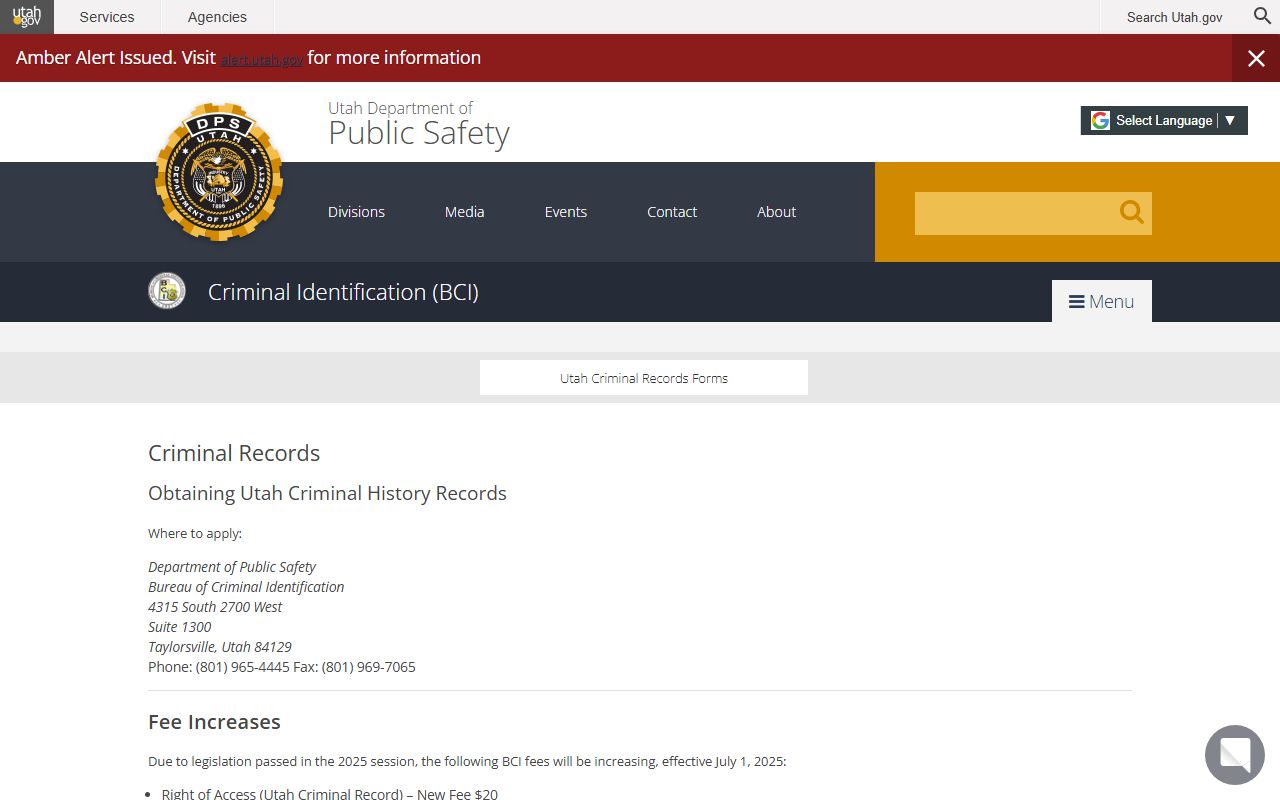
BCI is at 4315 South 2700 West, Suite 1300, Taylorsville, UT 84129, phone 801-965-4445, open Monday through Friday. A 2025 law set the Right of Access fee for a Utah criminal record at $20, effective July 1, 2025.
Utah Bureau of Criminal Identification
4315 South 2700 West, Suite 1300
Taylorsville, UT 84129
801-965-4445
Mon-Fri 8:00 a.m.-5:00 p.m.
Sealed vs. Expunged Records
Utah law lets some criminal records be removed from public view. People mix up the words, but in Utah the practical path is expungement. A sealed record is hidden from the public while the file still exists. An expunged record is treated as though the arrest or conviction did not happen, and the public can no longer see it. After an expungement, Utah law lets a person answer many questions as if the event never occurred, with some exceptions.
| Sealed | Expunged | |
|---|---|---|
| Visibility | Hidden from the public | Removed from public criminal history |
| Law Enforcement | Limited access remains | Stored in a file open only to listed agencies |
| Eligibility in Utah | Set by court rule and judge order | Title 77, Chapter 40a; needs a BCI certificate |
| Effect | Not publicly searchable | May answer as if it never occurred, with exceptions |
Utah Courts has a self-help page that walks through adult criminal expungement.
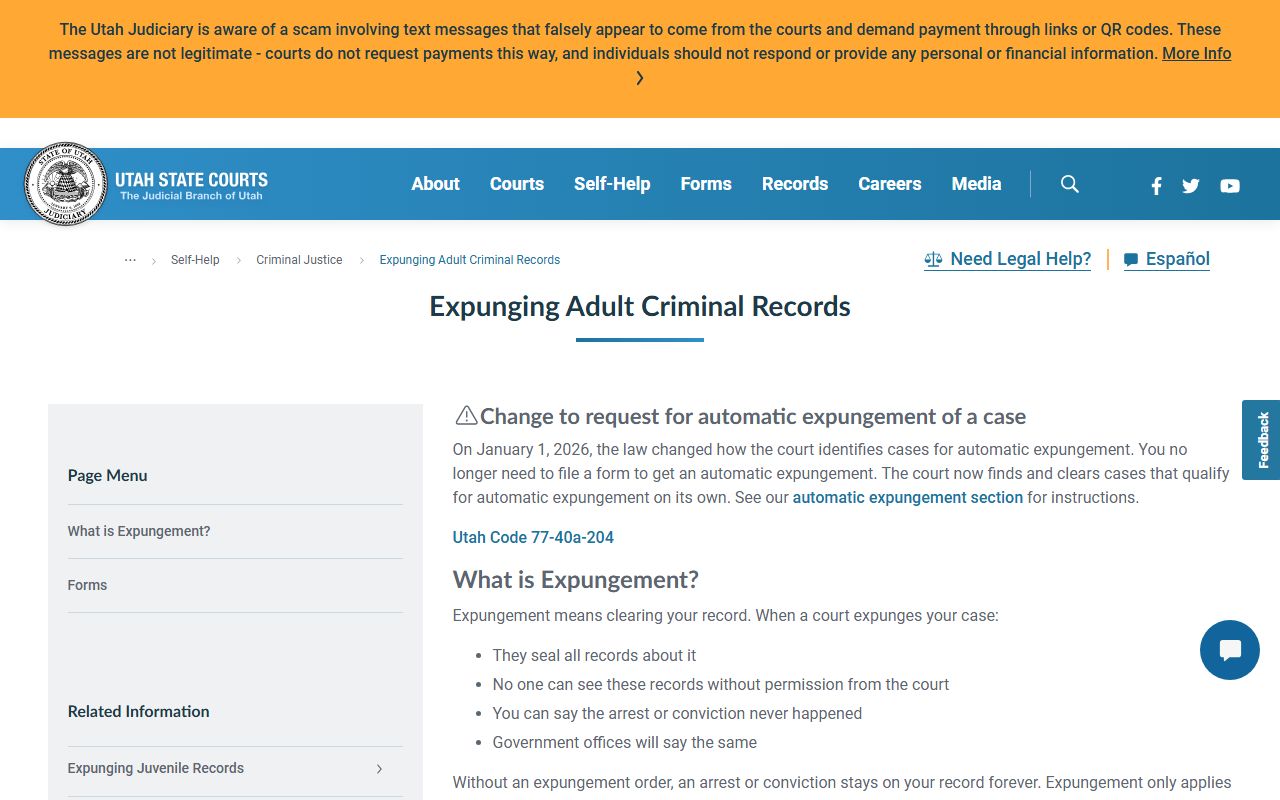
The expungement law itself starts with the definitions in Utah Code § 77-40a-101.
How to Expunge a Utah County Criminal Record
The usual path runs through BCI first and the court second. You apply to BCI for a Certificate of Eligibility. BCI runs a background check and notifies you by mail or email whether the certificate is approved or denied. With the certificate, you file the right petition and proposed order with the court, serve the required agencies, and ask a judge to sign the order. Eligibility for a conviction certificate is set out in Utah Code § 77-40a-303.
- Apply to BCI for a Certificate of Eligibility and pay the fee.
- Wait for BCI to run the background check and mail or email the result.
- File the petition and order with the court that handled the case.
- Serve the prosecutor and other required agencies.
- Get the judge's signed order, which BCI then processes.
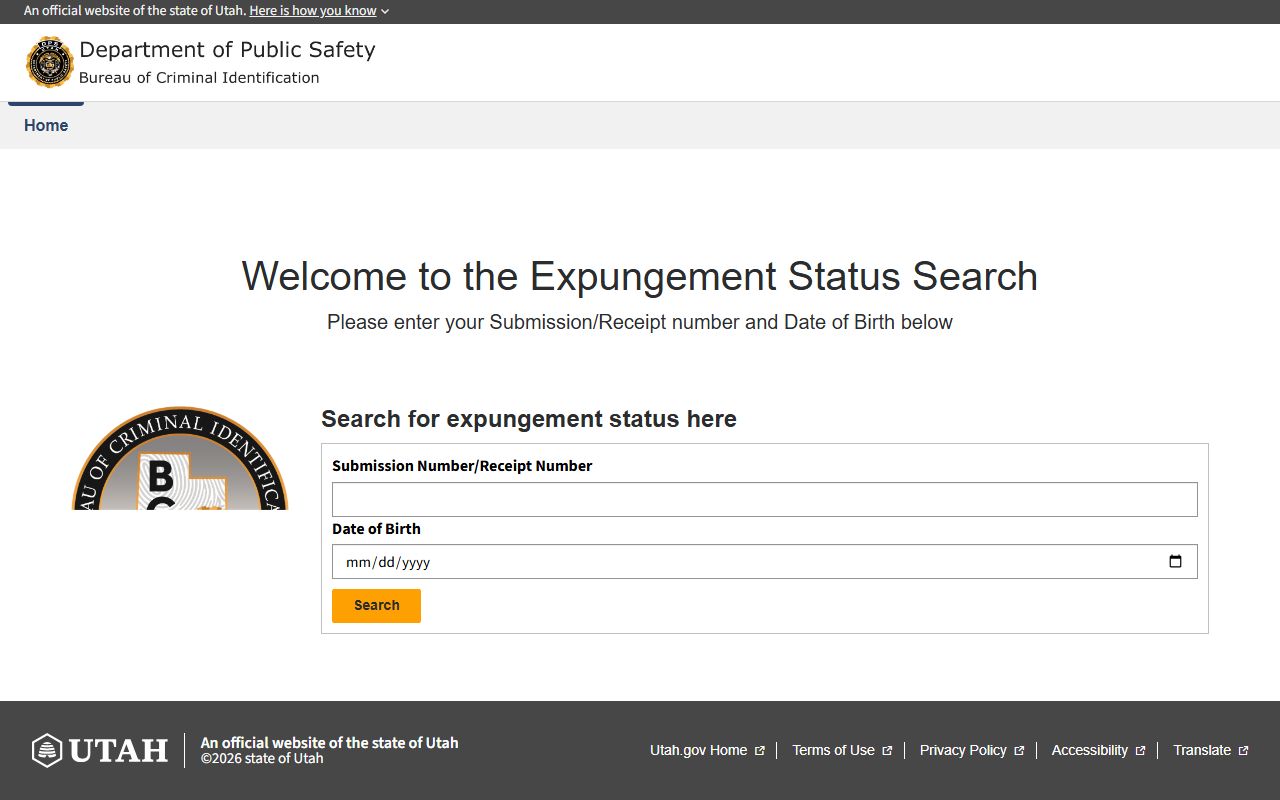
BCI publishes a processing date and a status portal that needs your submission or receipt number and date of birth.
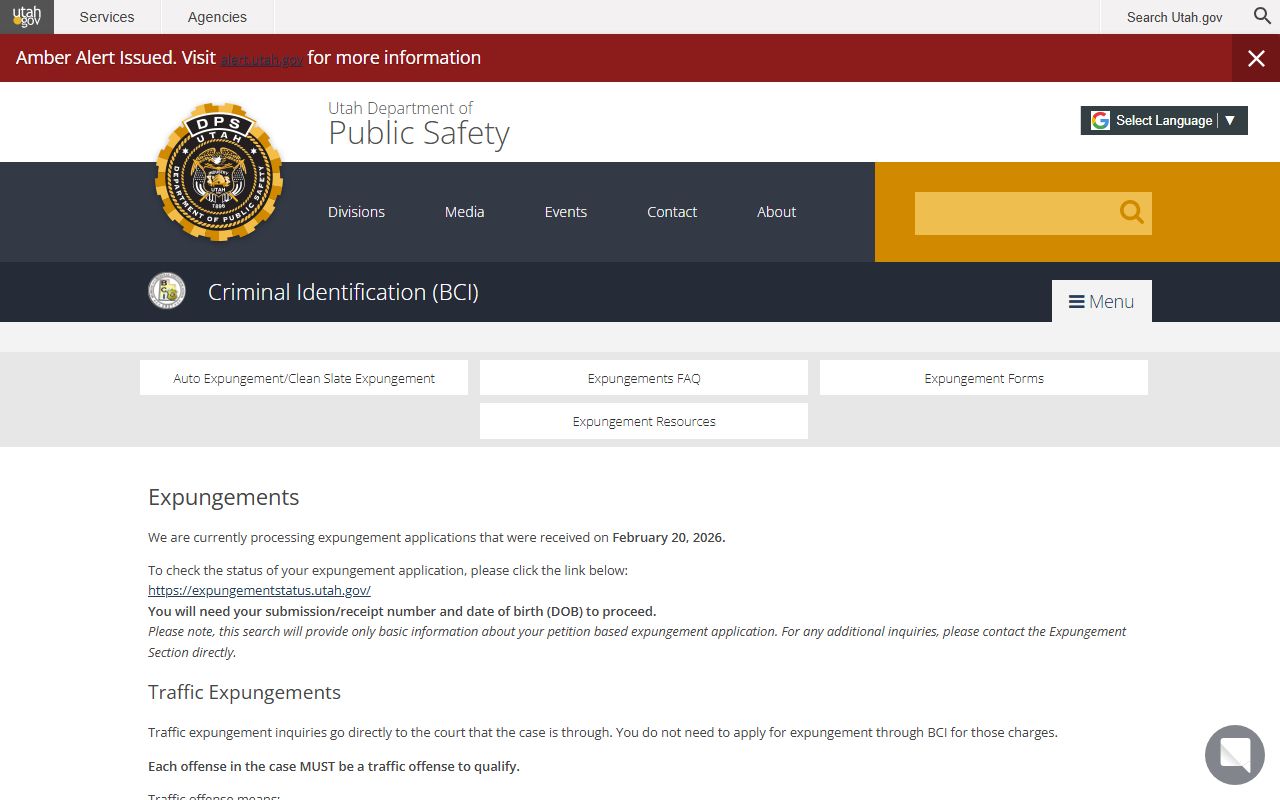
You can check where your application stands through the BCI expungement status site.
Traffic-only cases are different. BCI says traffic expungement inquiries go directly to the court that handled the case, and you do not apply through BCI when every offense in the case is a traffic offense. The traffic court records page covers that route, including DUI handling.
Note: Once a judge signs the order, BCI removes the information from public Utah criminal history and stores it in a file open only to listed agencies.
Background Check Considerations
People use arrest and criminal records for many reasons, but the legal use matters. A formal background check for hiring, housing, credit, or insurance is regulated by the federal Fair Credit Reporting Act. Those checks must come from a compliant consumer reporting agency and follow strict rules. A casual public-records lookup is not the same thing and cannot be used for those decisions. For an official Utah criminal history, use BCI, not a quick web search.
Important: This site is not a consumer reporting agency under the FCRA, and its information may not be used for credit, employment, tenant, or insurance decisions.
Restricted Criminal Records in Utah County
Not every criminal matter is public. Juvenile delinquency, child welfare, and termination of parental rights cases are not shown on the public court search. Sealed and expunged cases do not appear either. Presentence investigation reports and victim impact statements are protected and are not public summary material. Records that would interfere with an active investigation or a fair trial can also be withheld. These limits come from the Utah Code of Judicial Administration, the same rules that govern the rest of the court file.
To understand which parts of a case stay public and which do not, the court records page explains the classification rules in detail. Records held by the Sheriff, such as case reports, follow the GRAMA process described on the public records page.